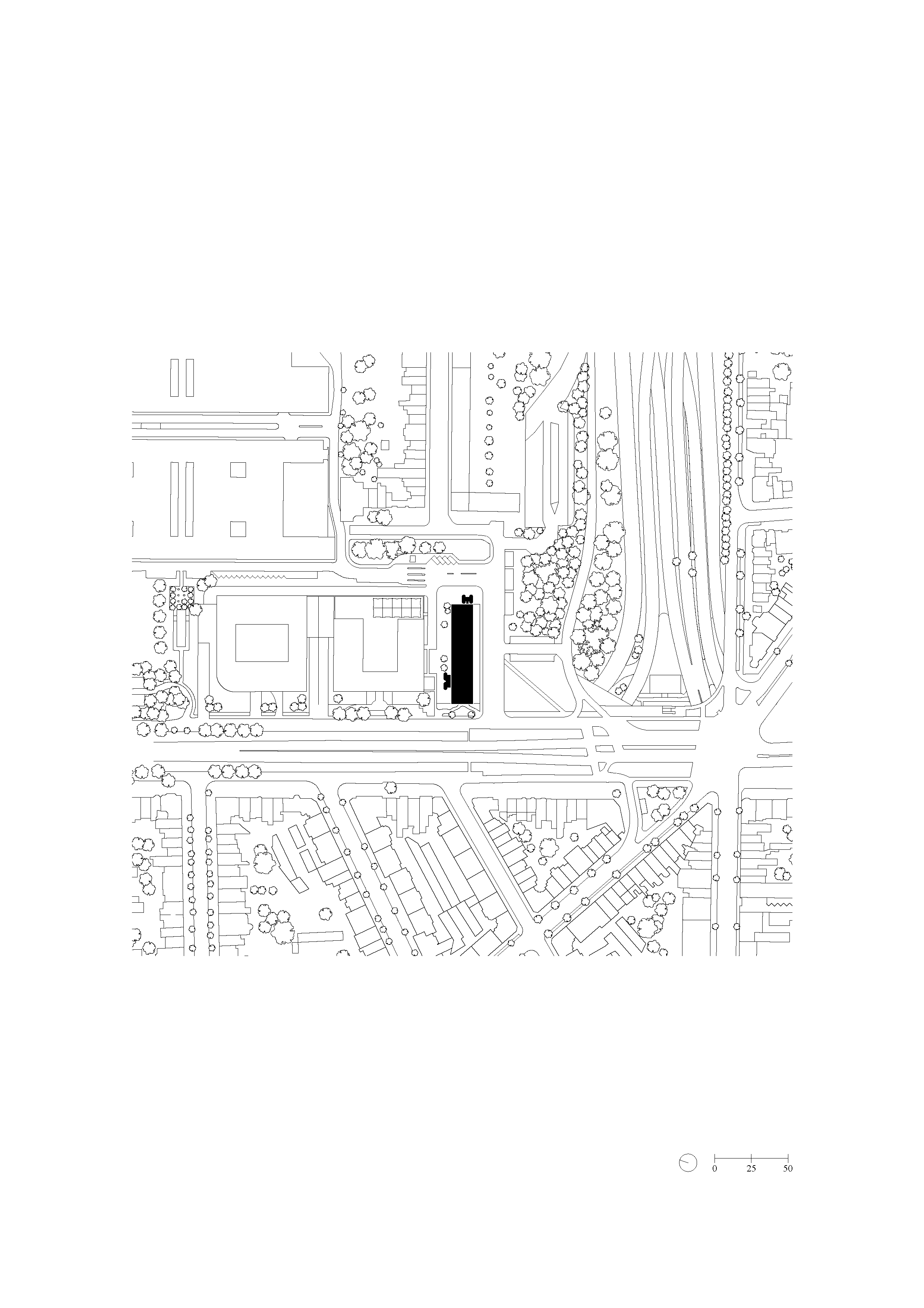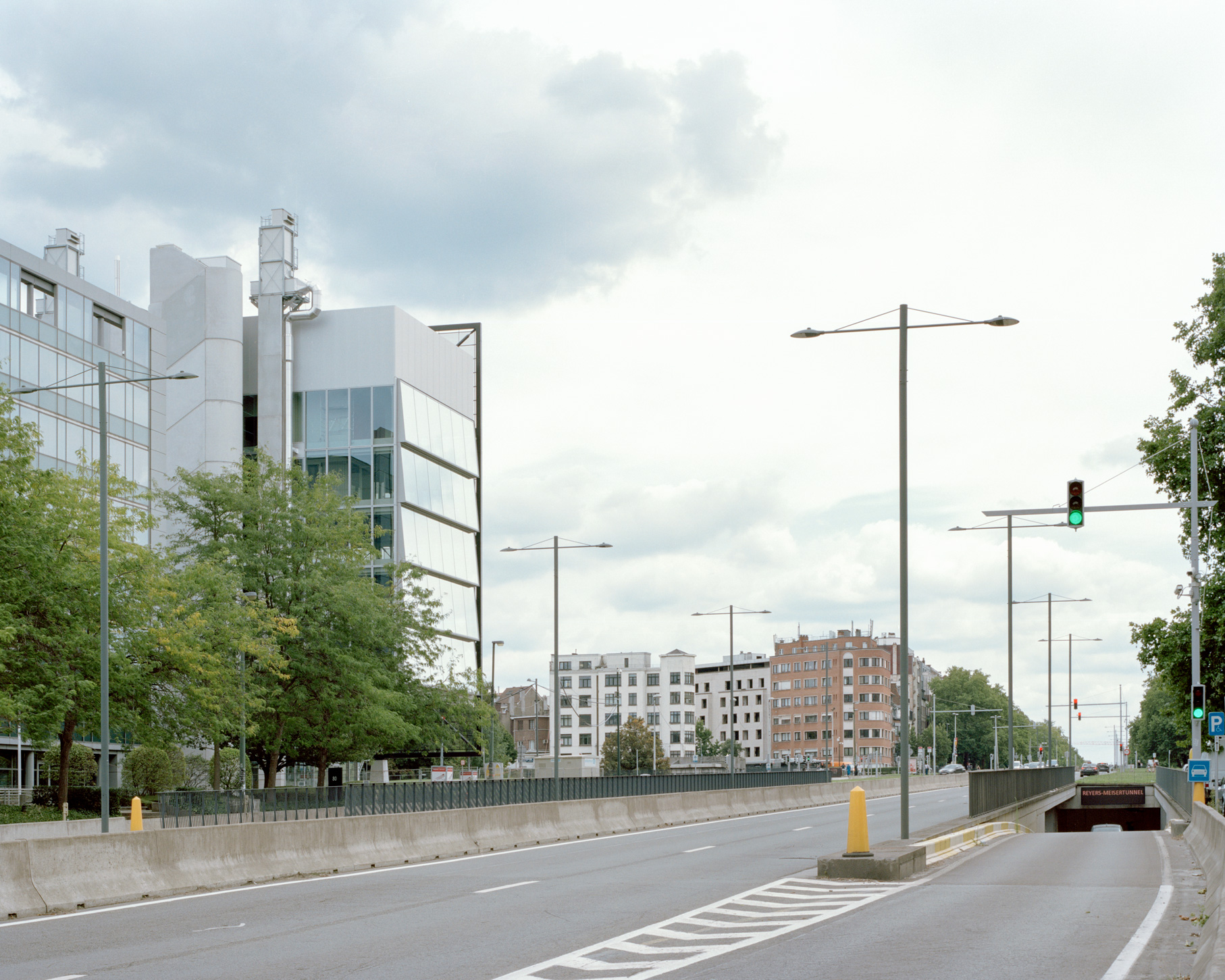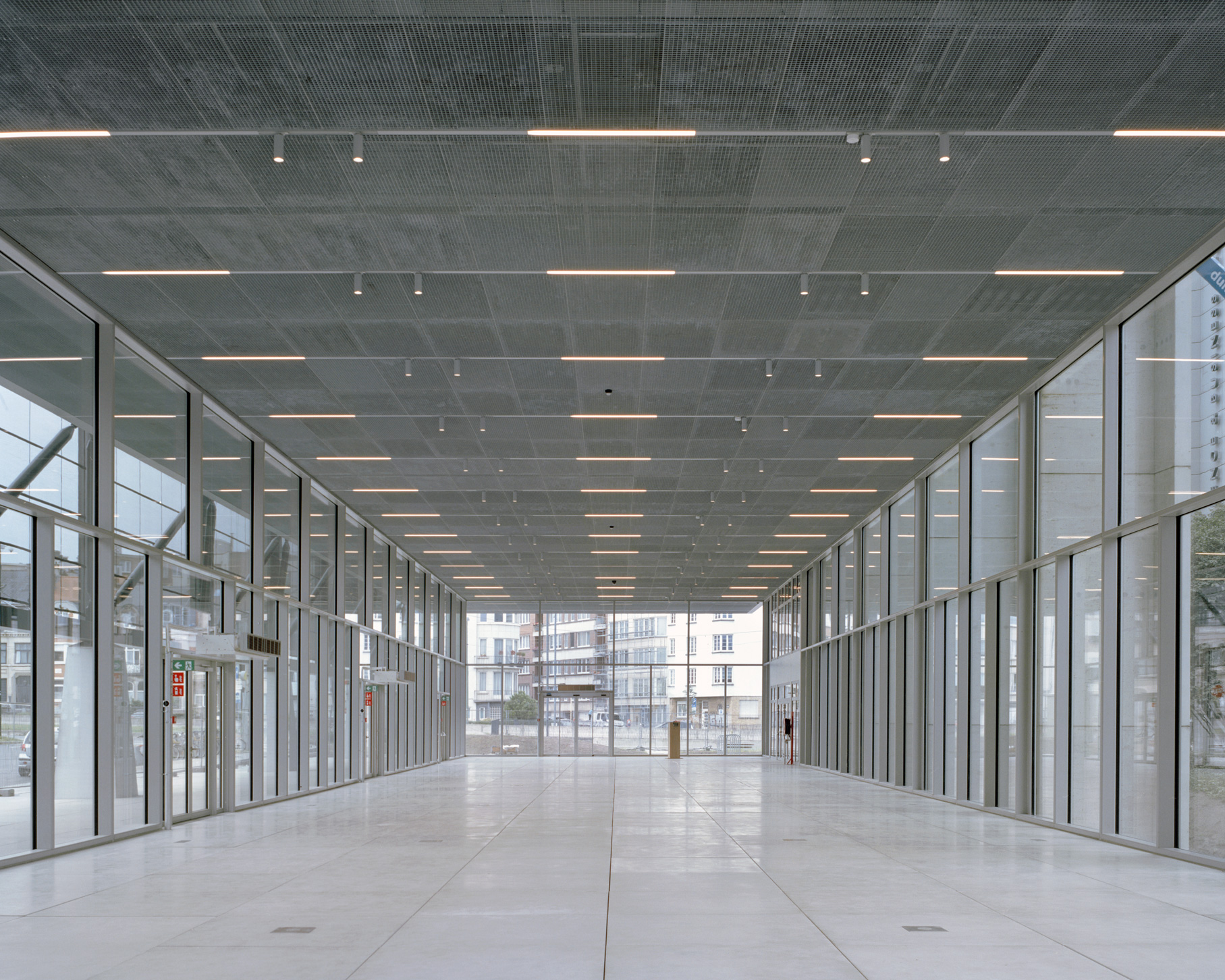
Located on the eastern edge of Brussels, at the crossroads between one of the main freeways leading out of the city and one of the major boulevards, this new building serves as the spearhead of a larger urban development. The project participates to reconfigure the existing media district, currently centered around Belgium’s national television and radio stations.
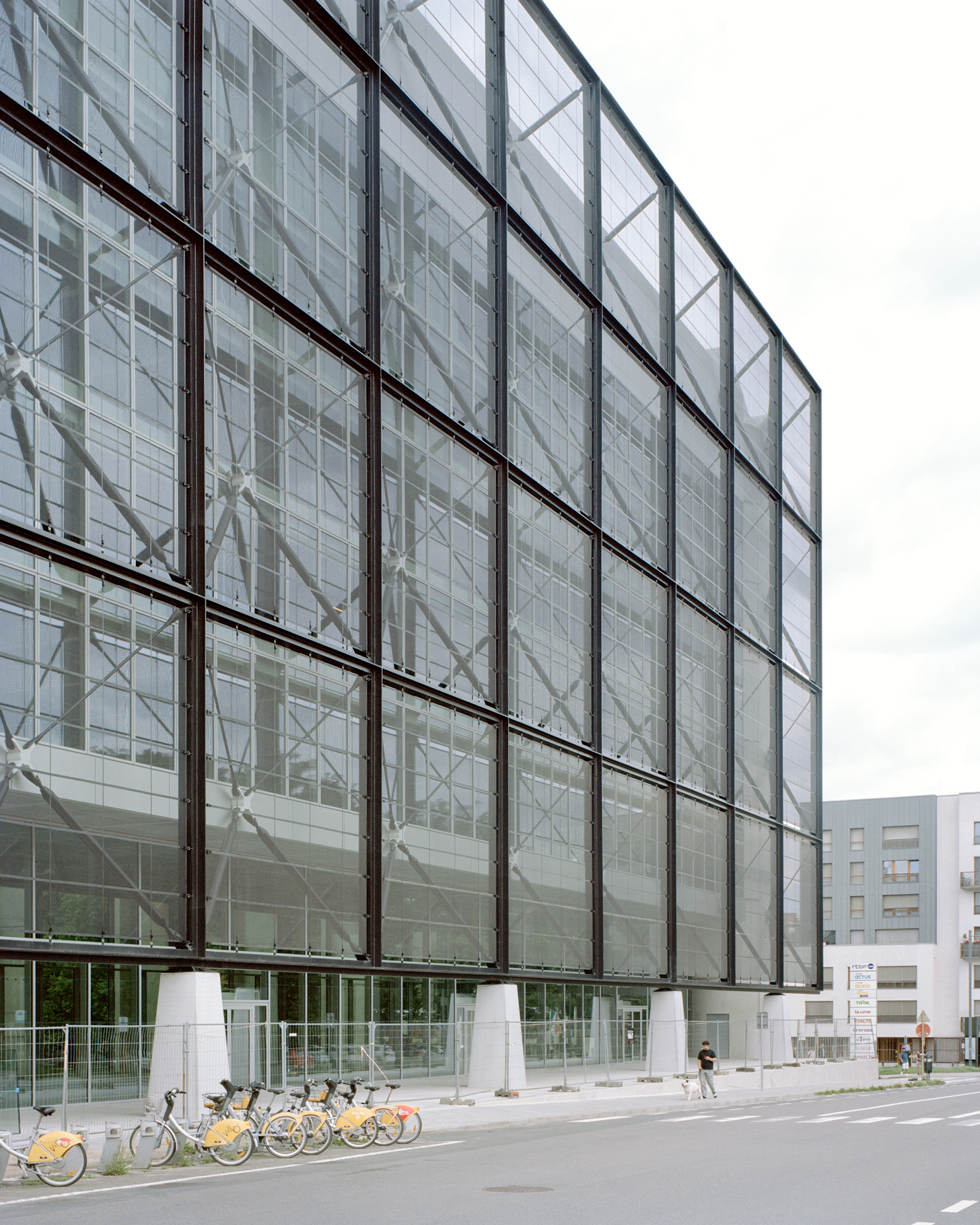
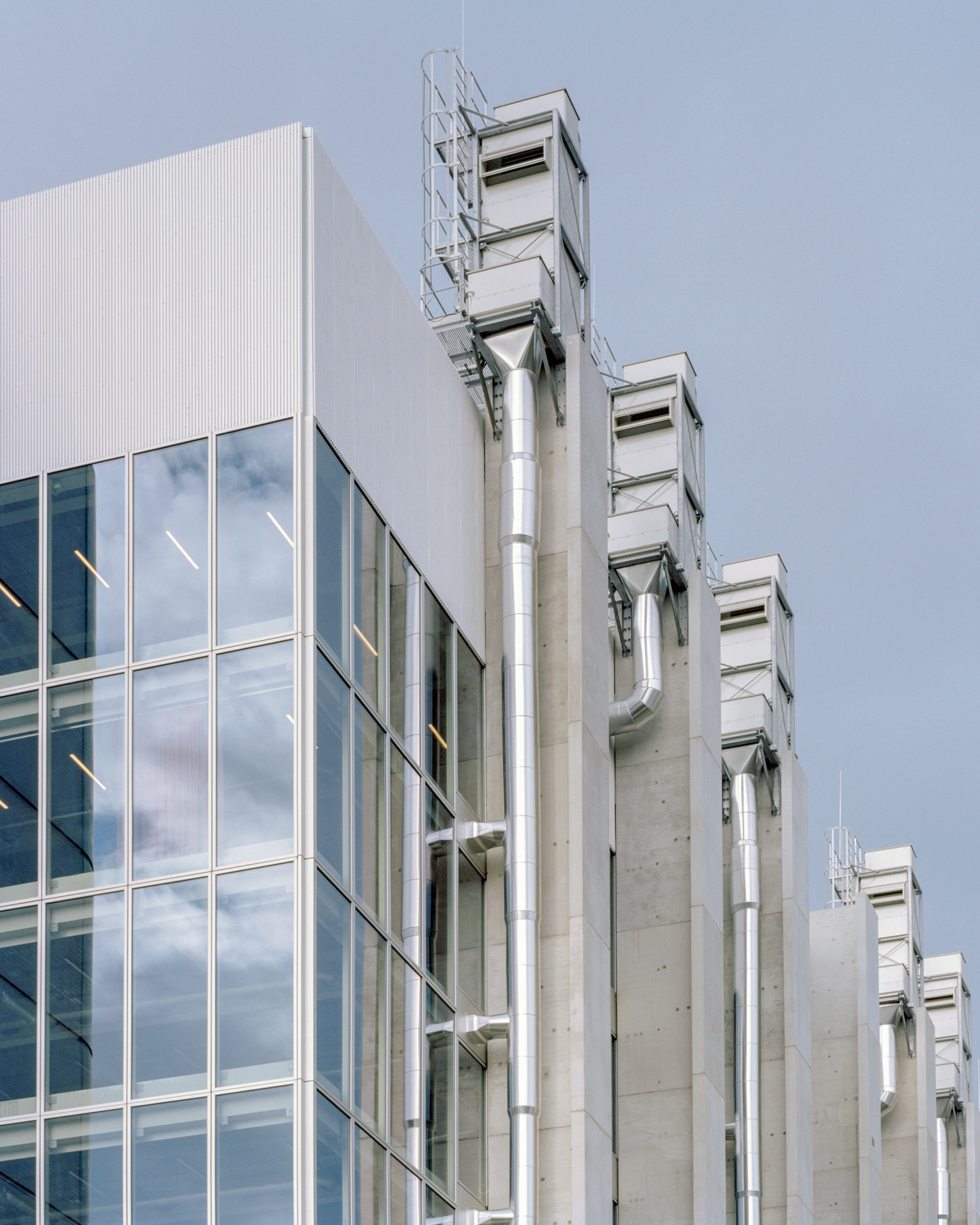
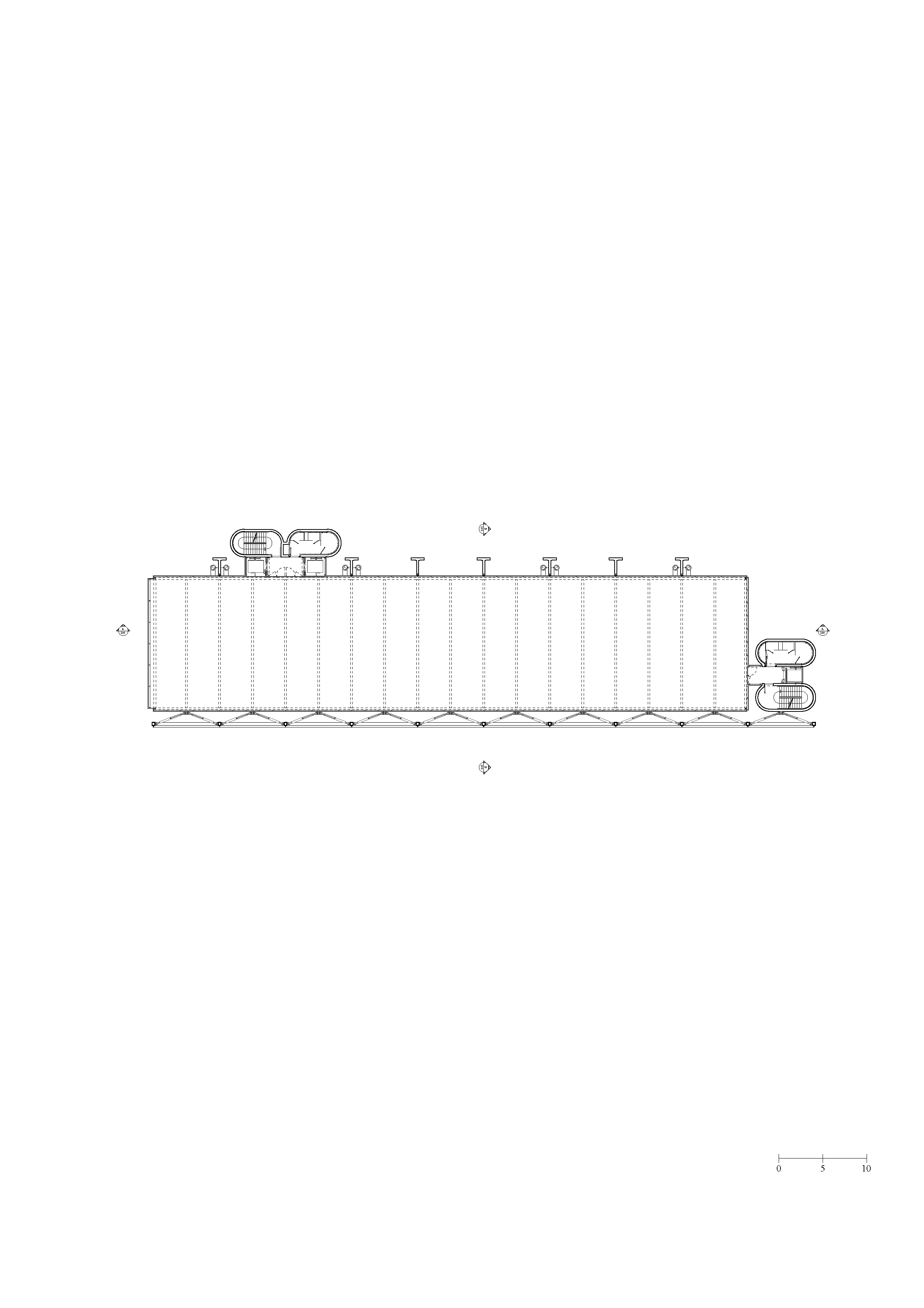
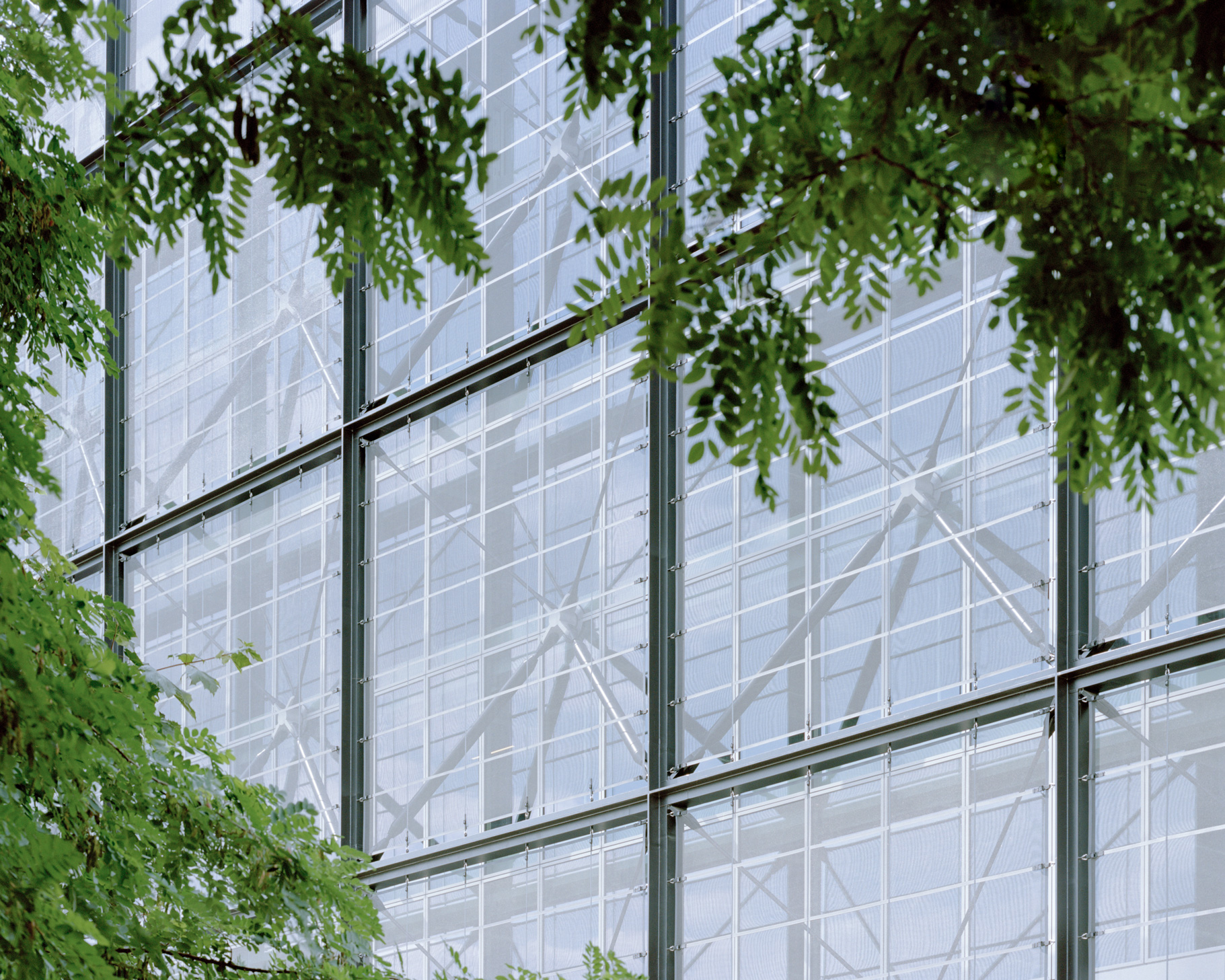
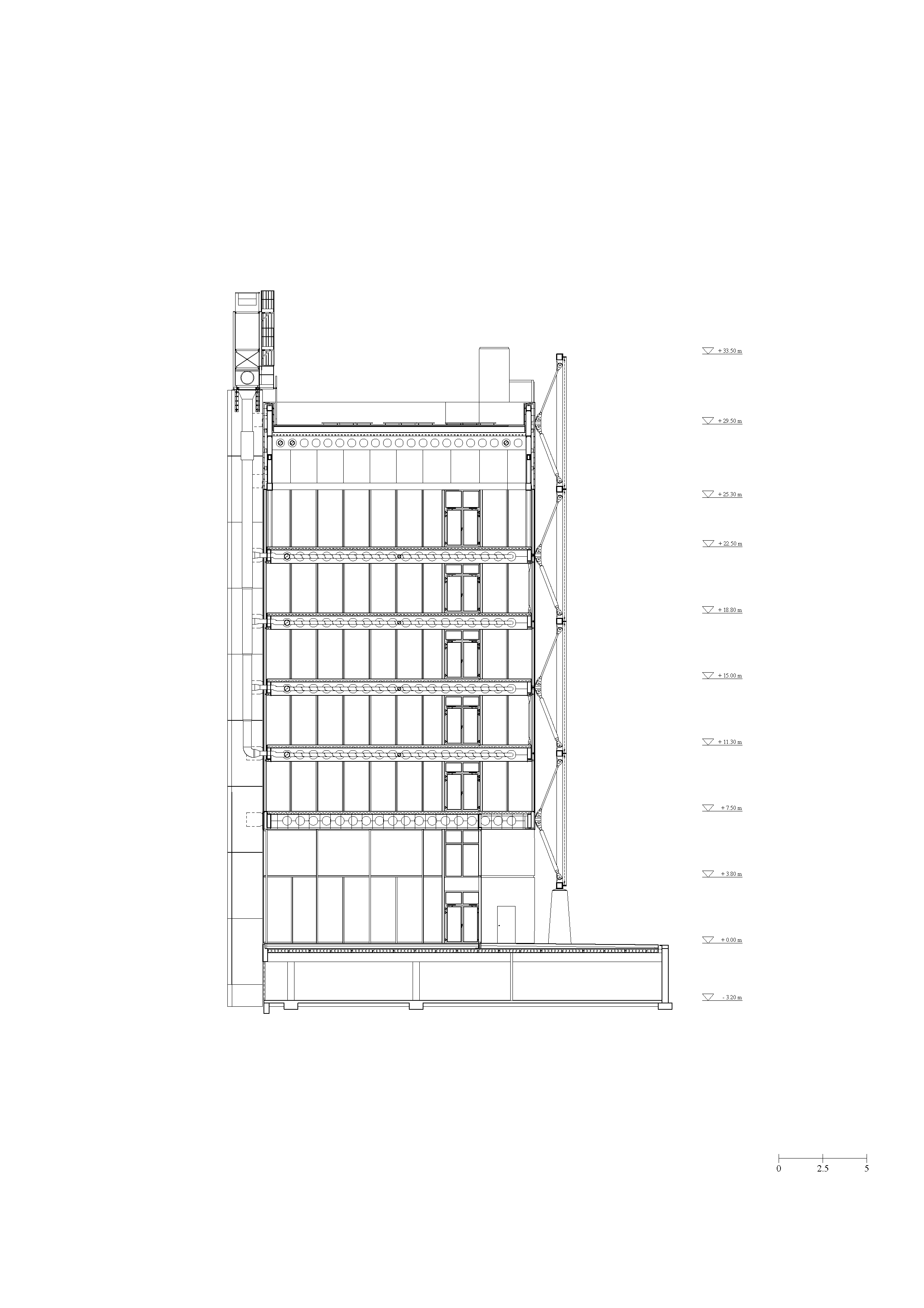
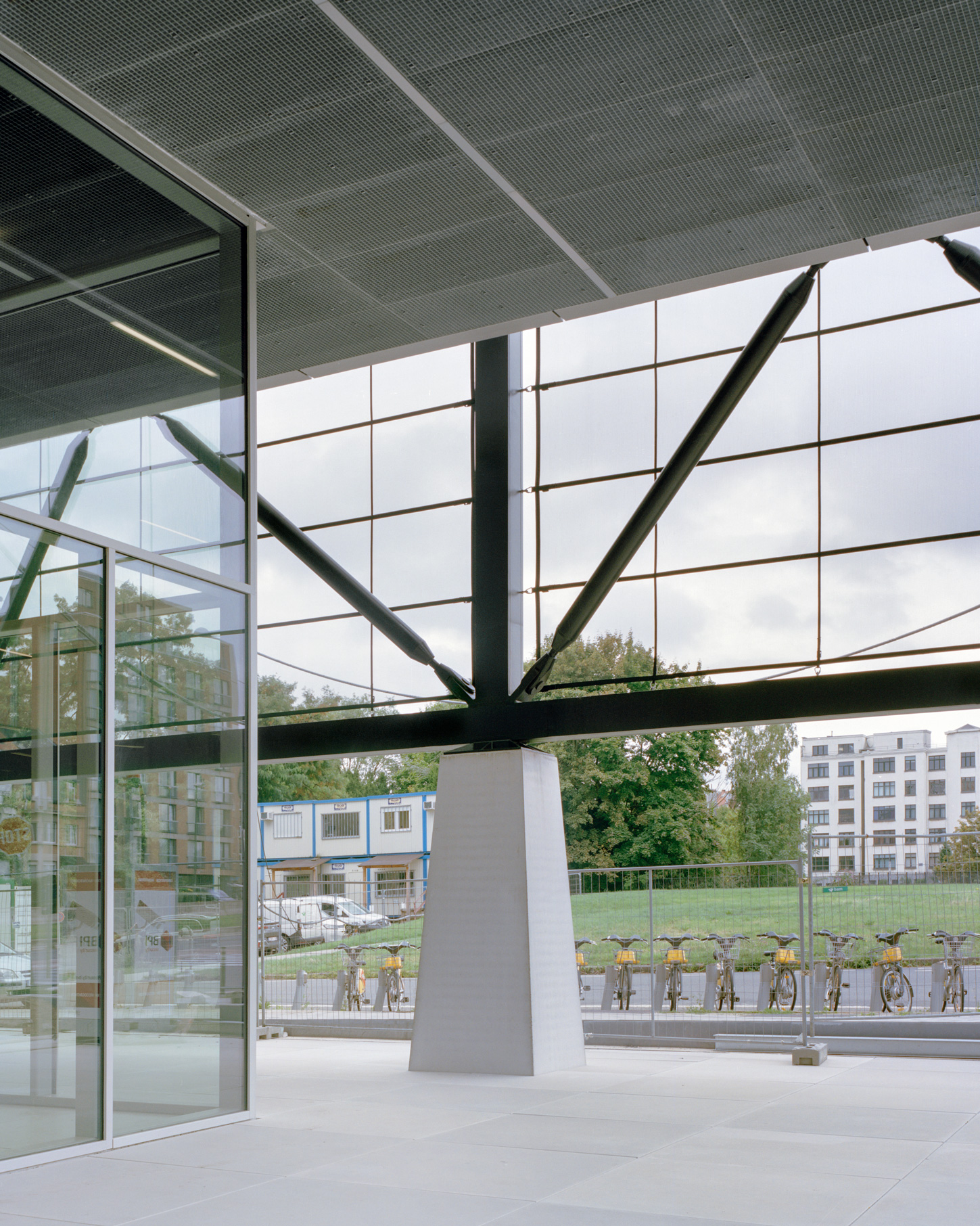
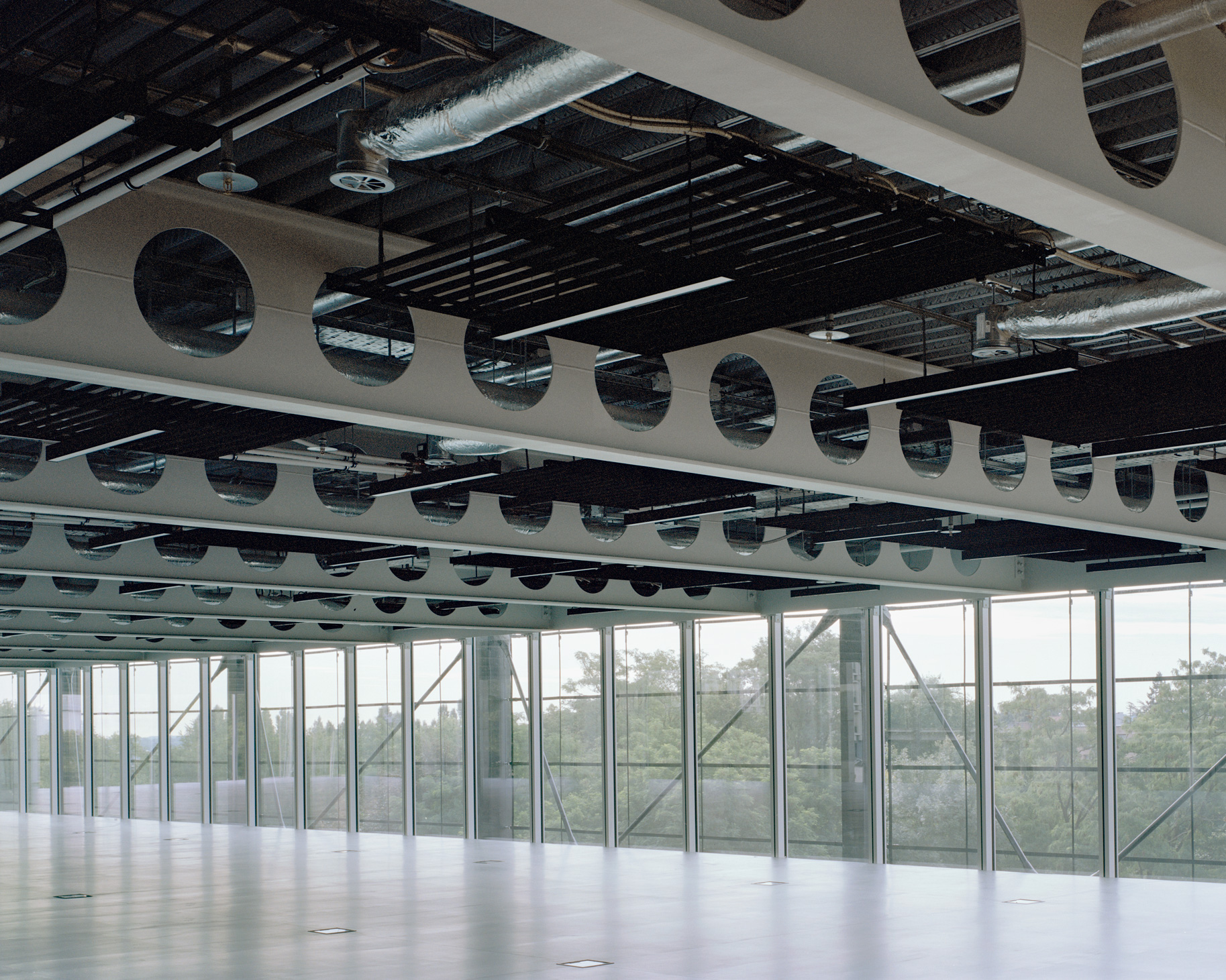
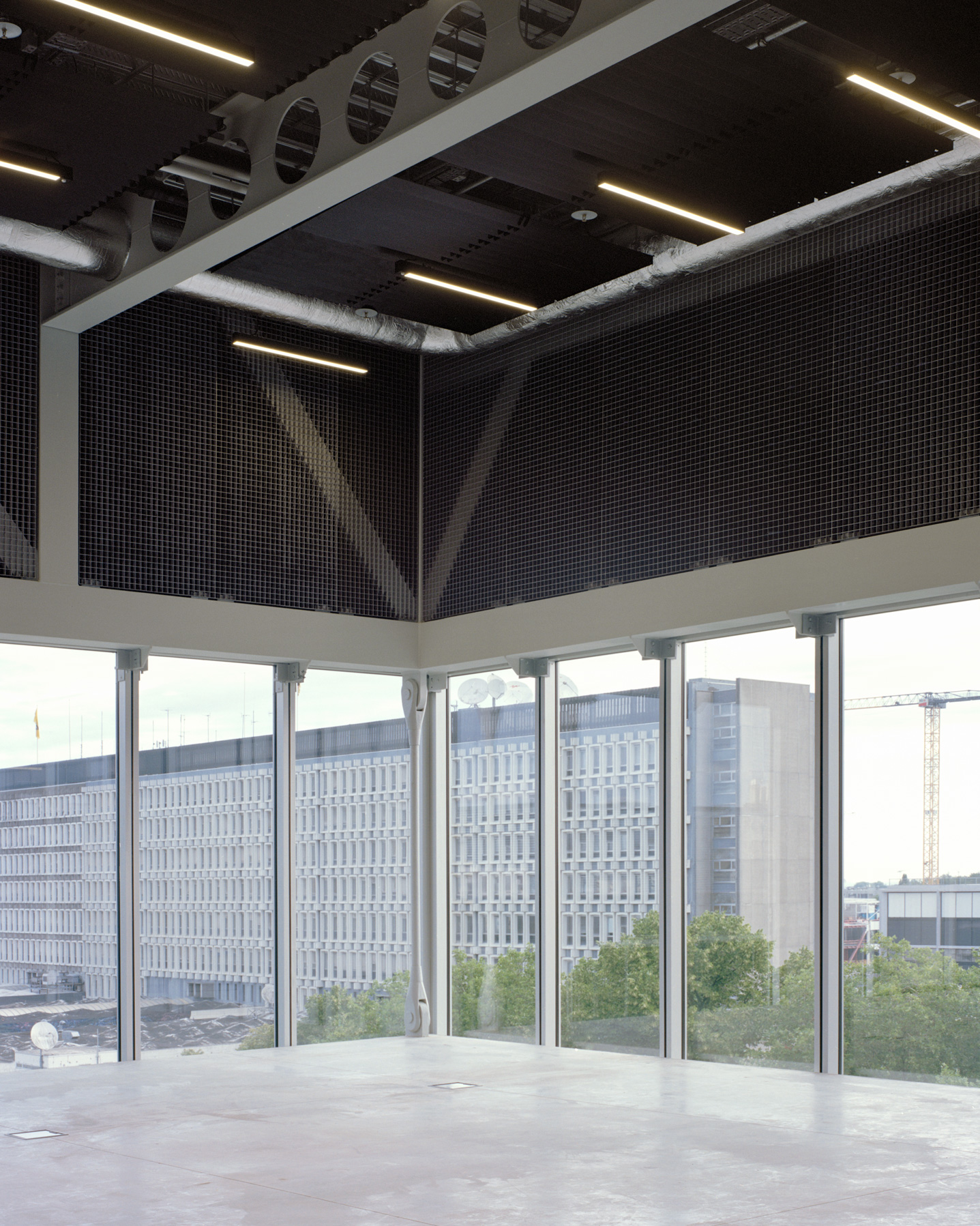
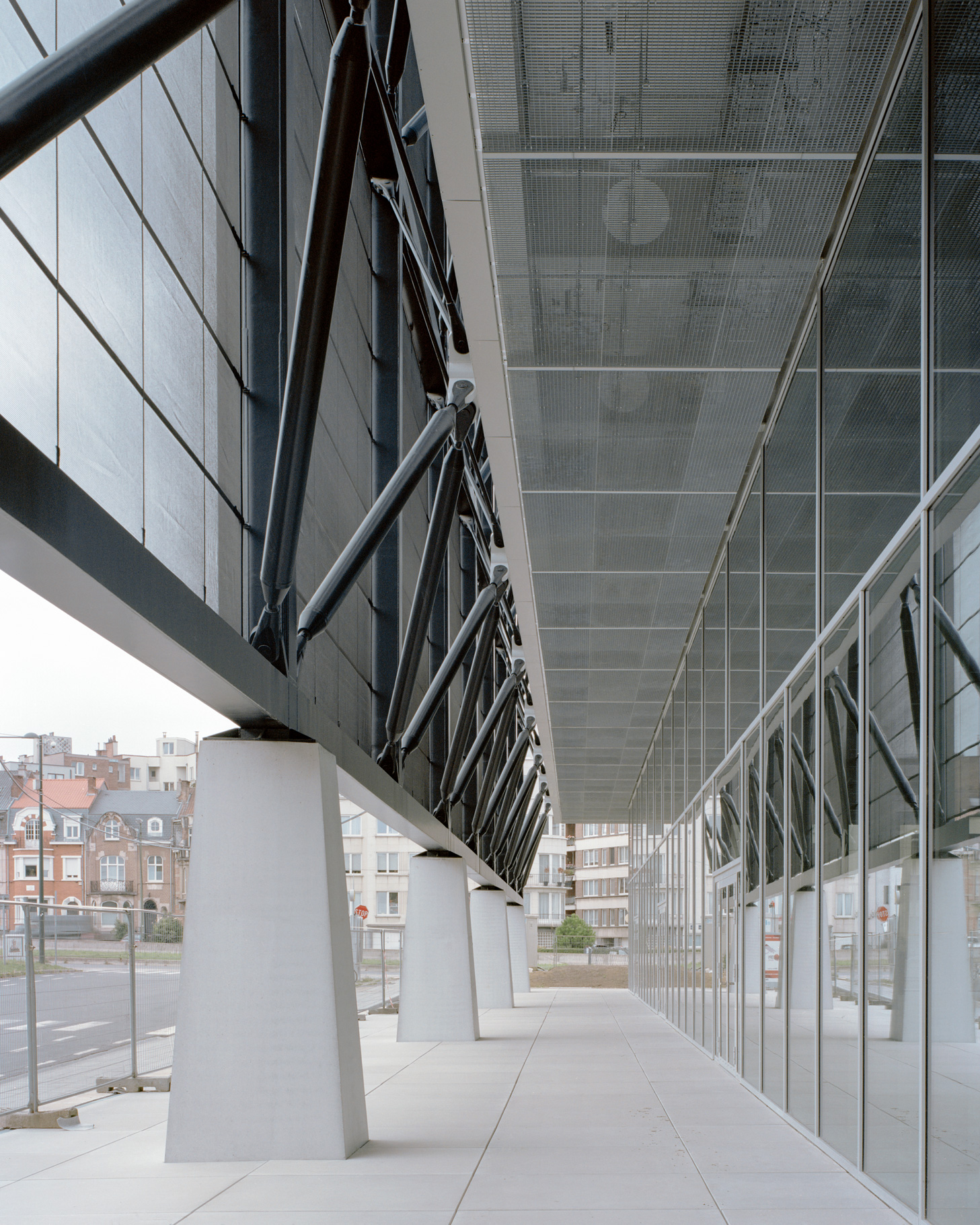
The building hosts a diverse mix of media-related start-ups and operators, including regional television recording and broadcasting studios, media hubs, and institutions that support and promote filmmaking in Brussels. The need for cohabitation among a diverse group of partners led to a design based on spatial adaptability and rational planning. Flexibility was achieved through structural design, distributing activities across open-plan floors that allow for numerous spatial configurations. The peripheral positioning of the structural elements, as well as the vertical distribution of the main services, resulted in totally free floors. The building is designed with distinct constructive systems, each adaptable to its own lifespan and future requirements. Structure, envelope, and finishing elements function as separate layers, allowing for independent maintenance and evolution over time. The building’s structural concept adapts to each orientation based on its specific surroundings. The southern façade,
designed as an urban screen with solar protection, responds to the larger scale of the neighborhood and surrounding infrastructure. In contrast, the more closed northern façade faces nearby existing buildings. On the east side, the main entrance is positioned to accommodate a shift in urban alignment, creating a broad forecourt that connects the building to the boulevard.