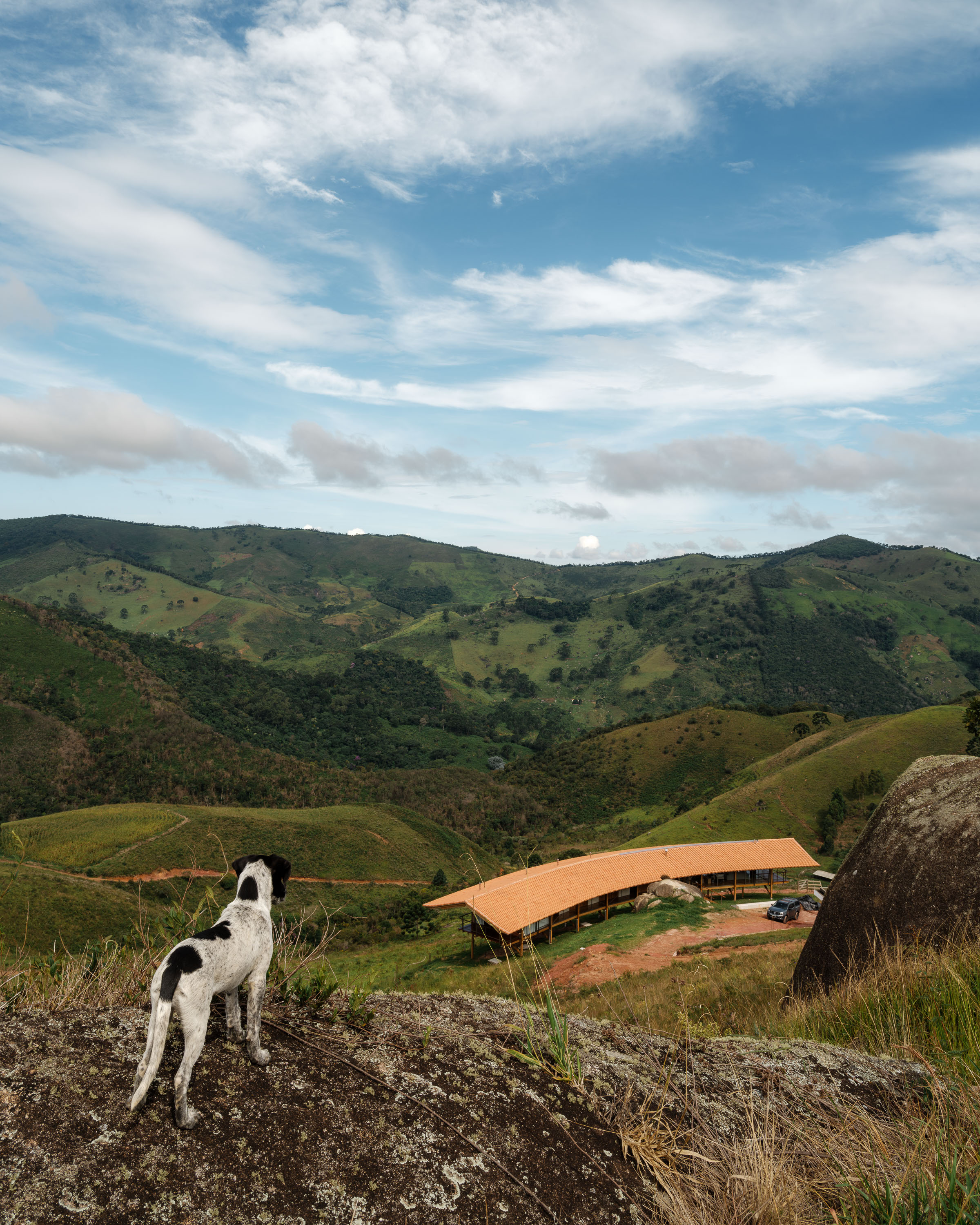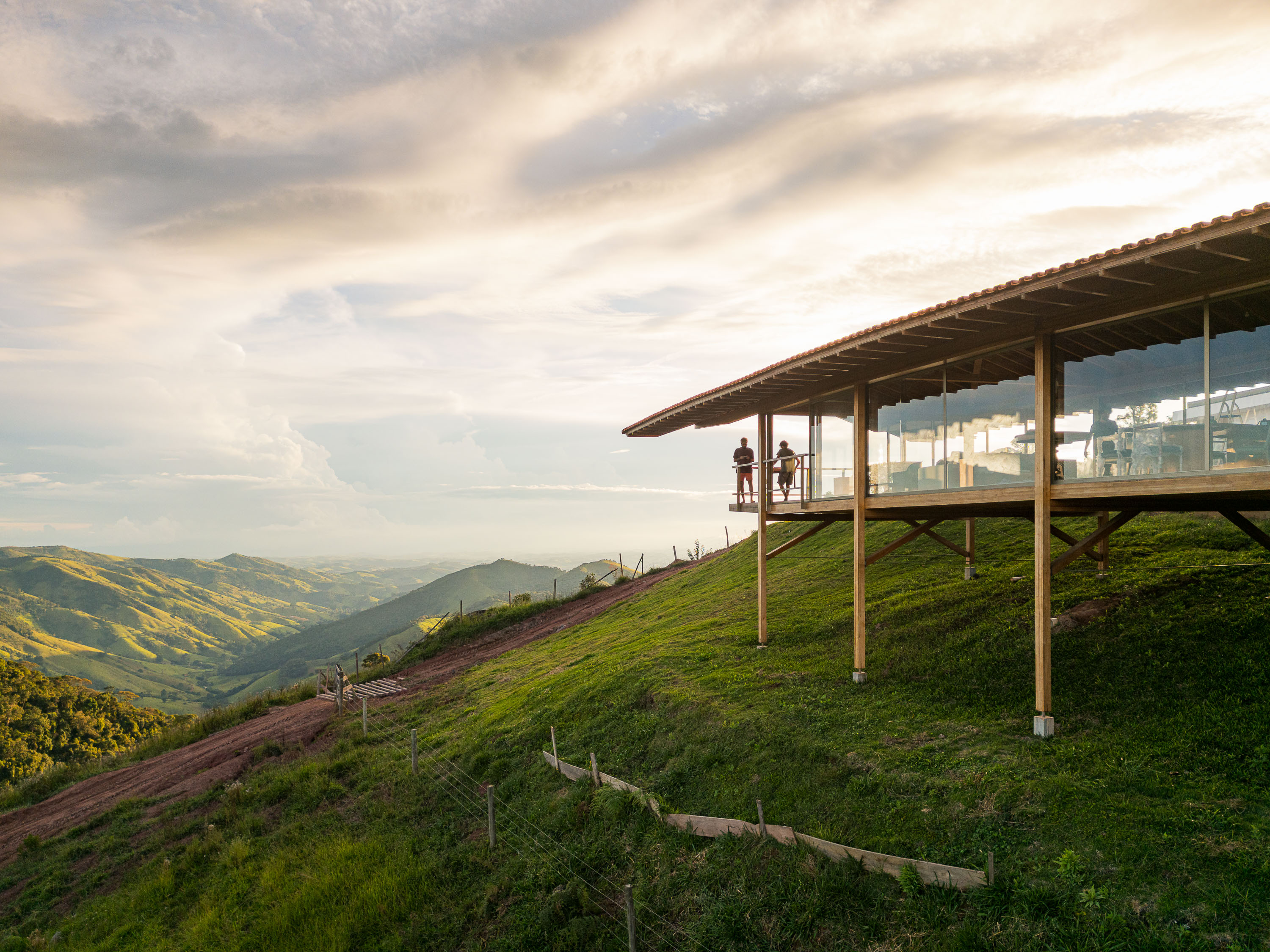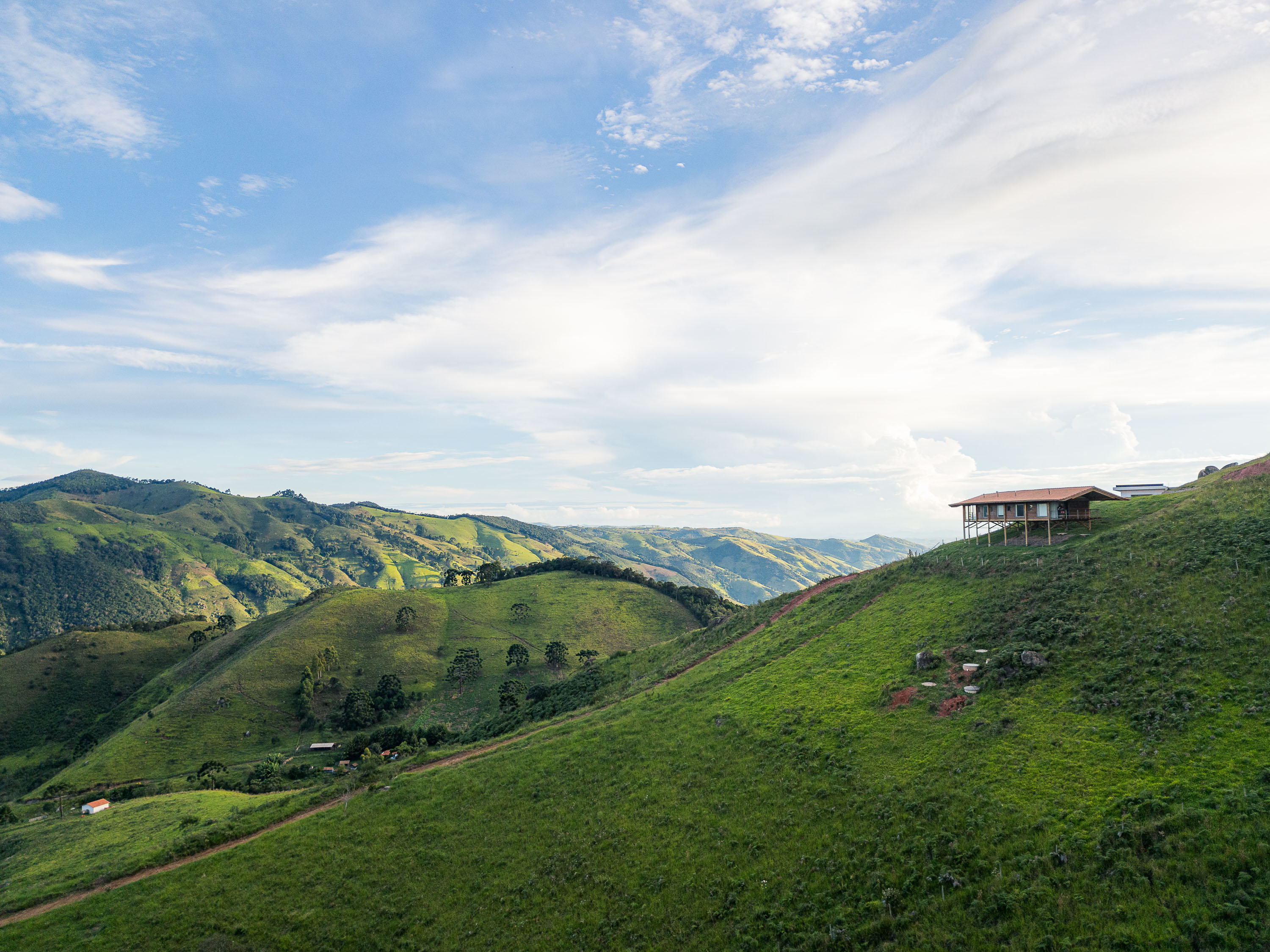
Situated at an altitude of 1,530 meters, the design for Terra Nostra Farm emerged from the challenge of defining the location of a family home alongside auxiliary structures to support small-scale artisanal cheese production on mountainous terrain. Located near the Serra da Bocaina National Park, the site opens up to an endless horizon.
From this vantage point, one can perceive the full breadth of the geography: the sweeping valley below and, in the distance, the undulating contours of the Mantiqueira mountain range. At the edge of the property, the Paraitinga River flows shortly after its source—still crystal clear. This river makes its way toward São Paulo, where it meets the Paraibuna River, forming the Paraíba do Sul. Intriguingly, near the town of Guararema, the river changes direction and turns northward—an almost unnatural inversion—tracing the path of the Paraíba Valley, which separates the Bocaina and Mantiqueira ranges and guides the gaze toward Rio de Janeiro.
From this site, one can observe the entire geography: the breadth of the valley and, in the distance, the next mountain range—Mantiqueira.
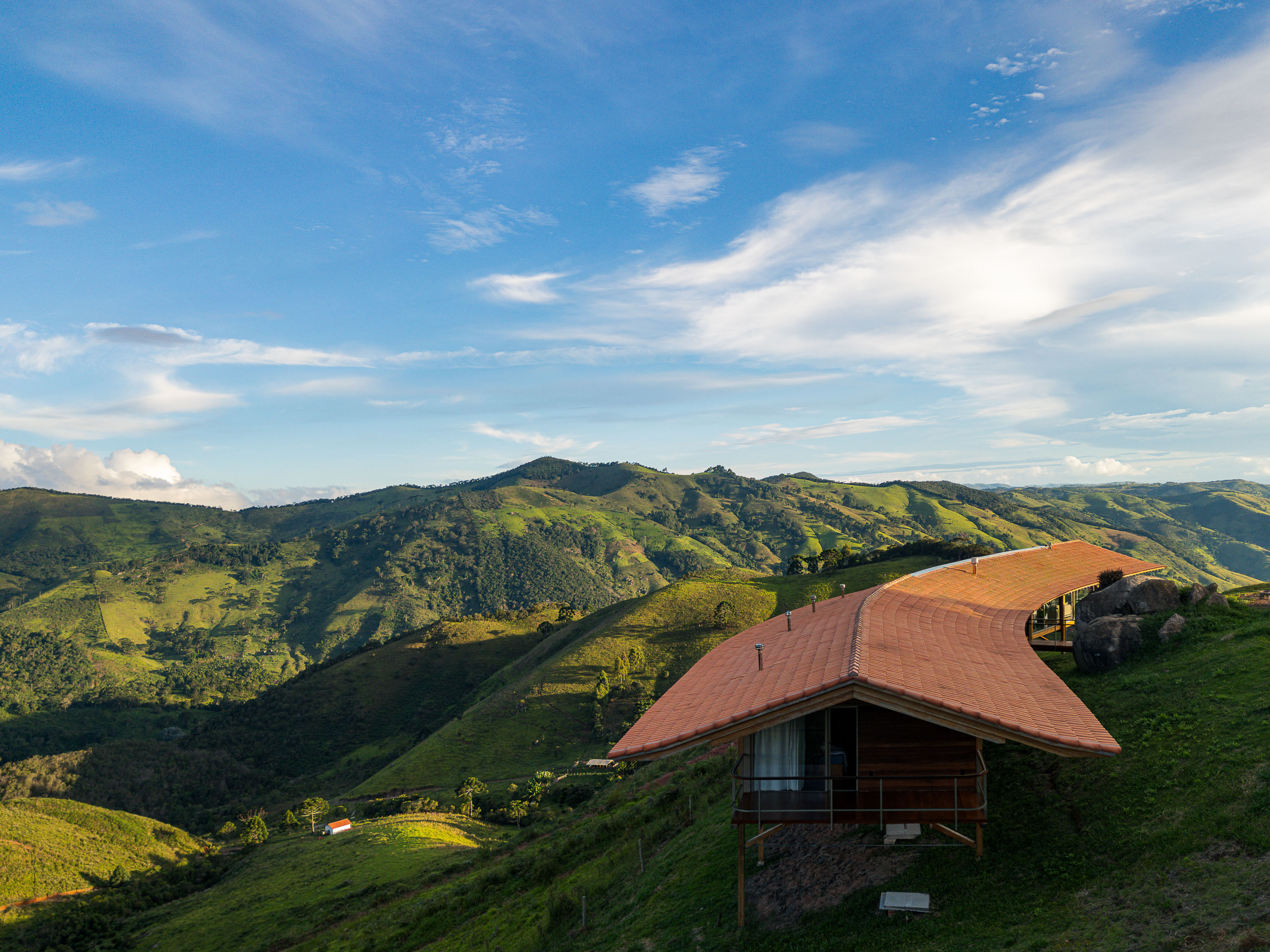
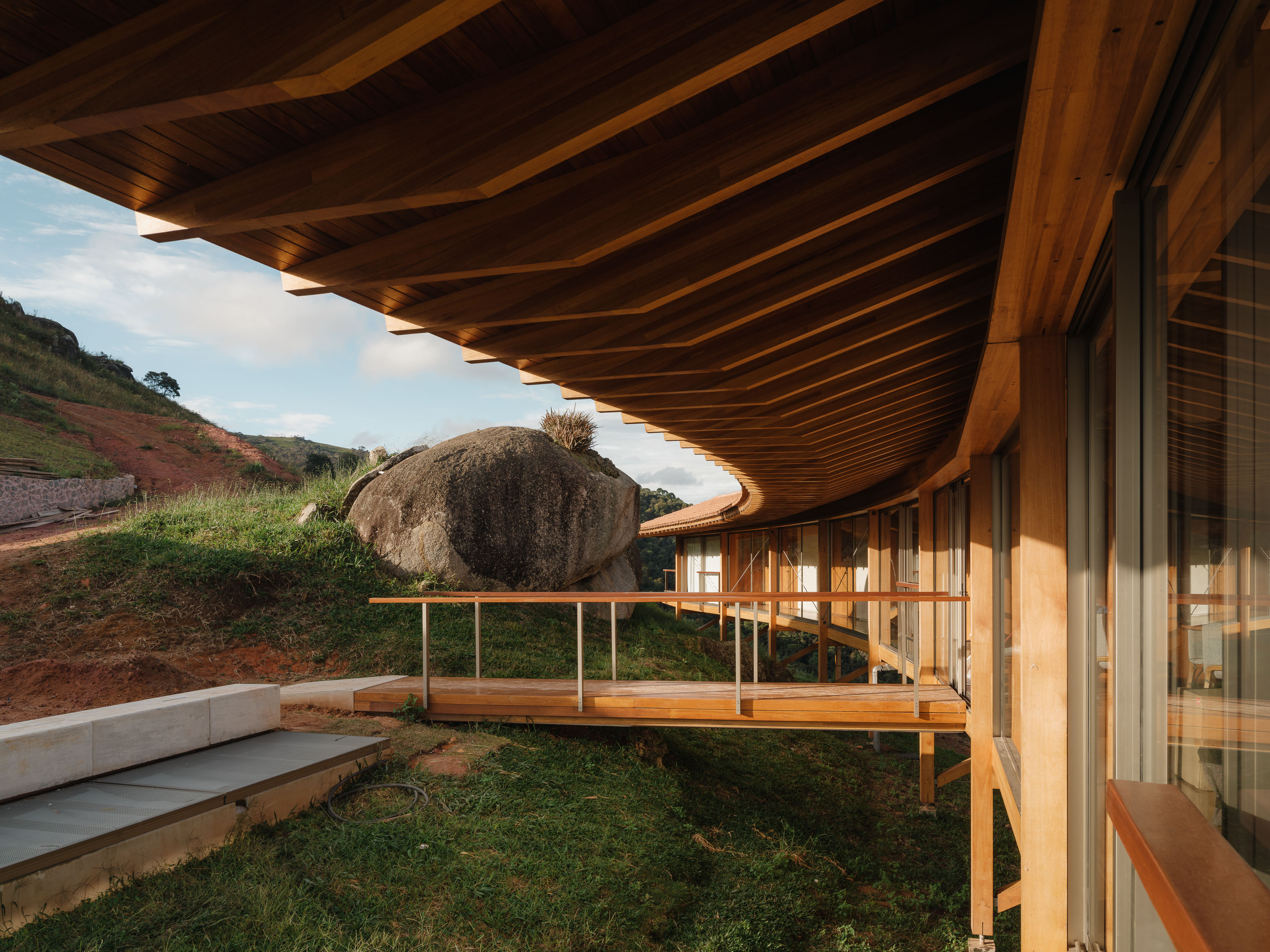
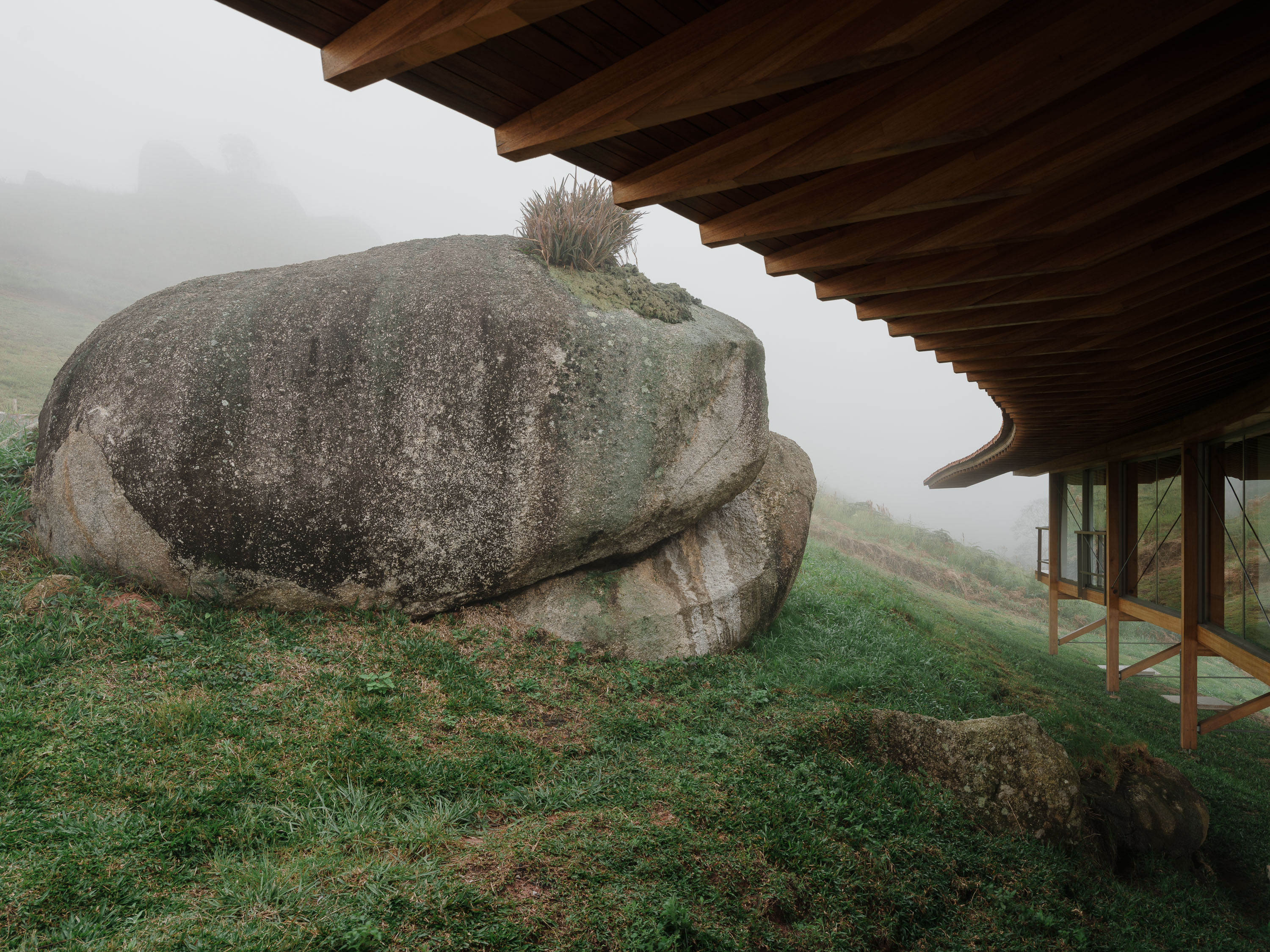
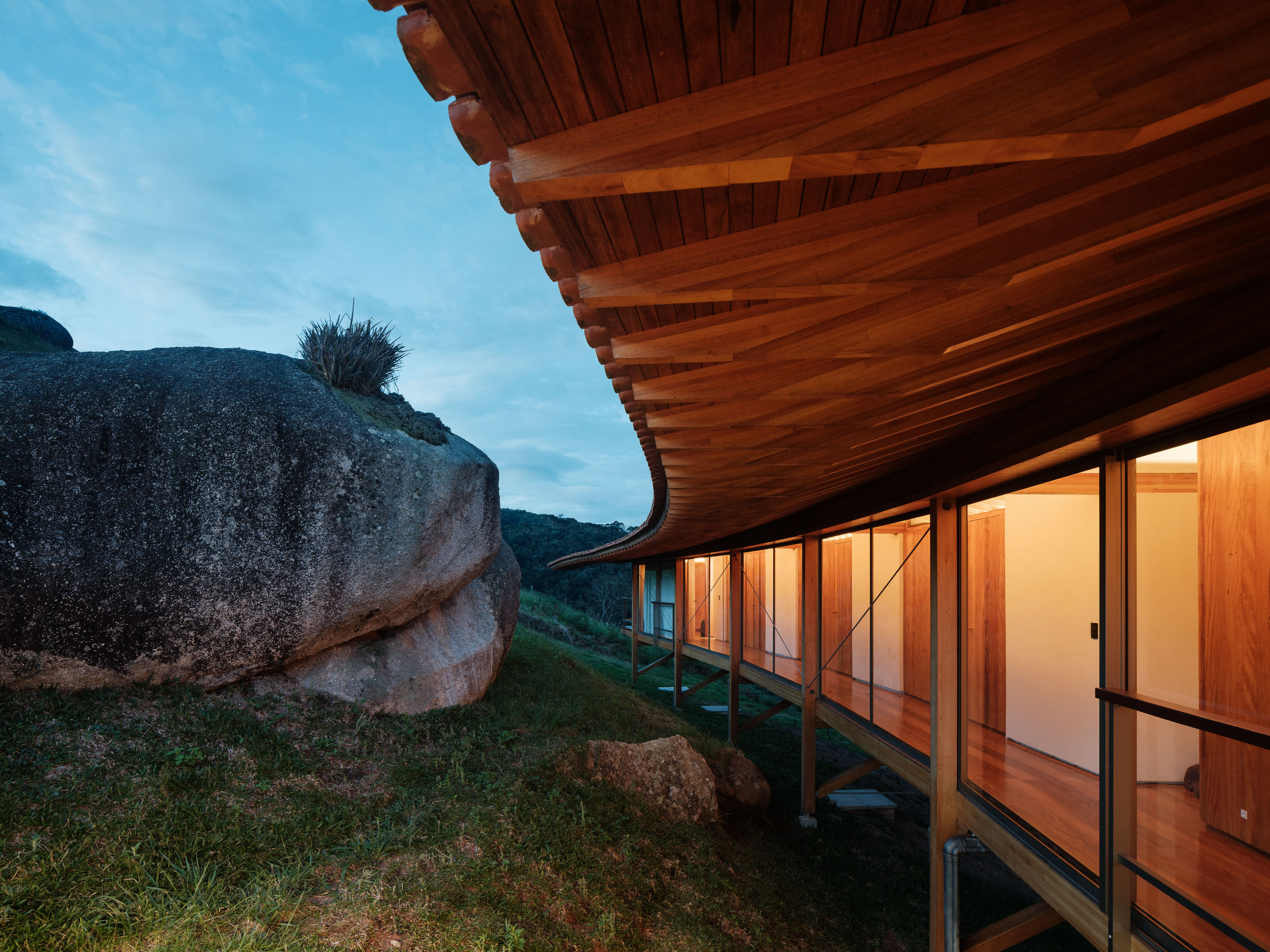
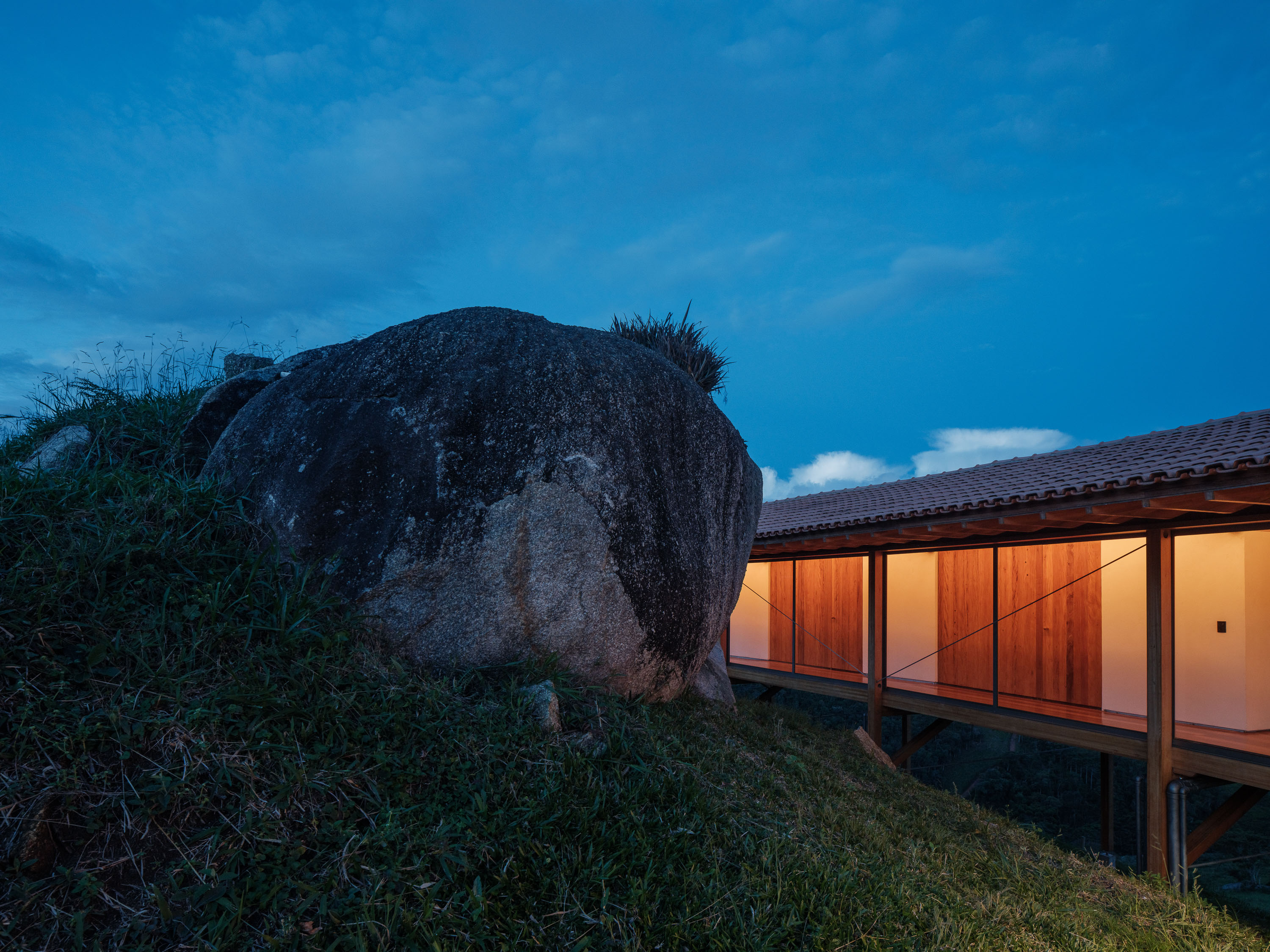
In the face of this vastness, we chose to focus on a specific landscape feature that we felt offered a meaningful place to build a home. In the middle of the sloped grassland stands a solitary tree, rooted in a rock, which serves as a natural landmark and anchoring point for the house’s design.
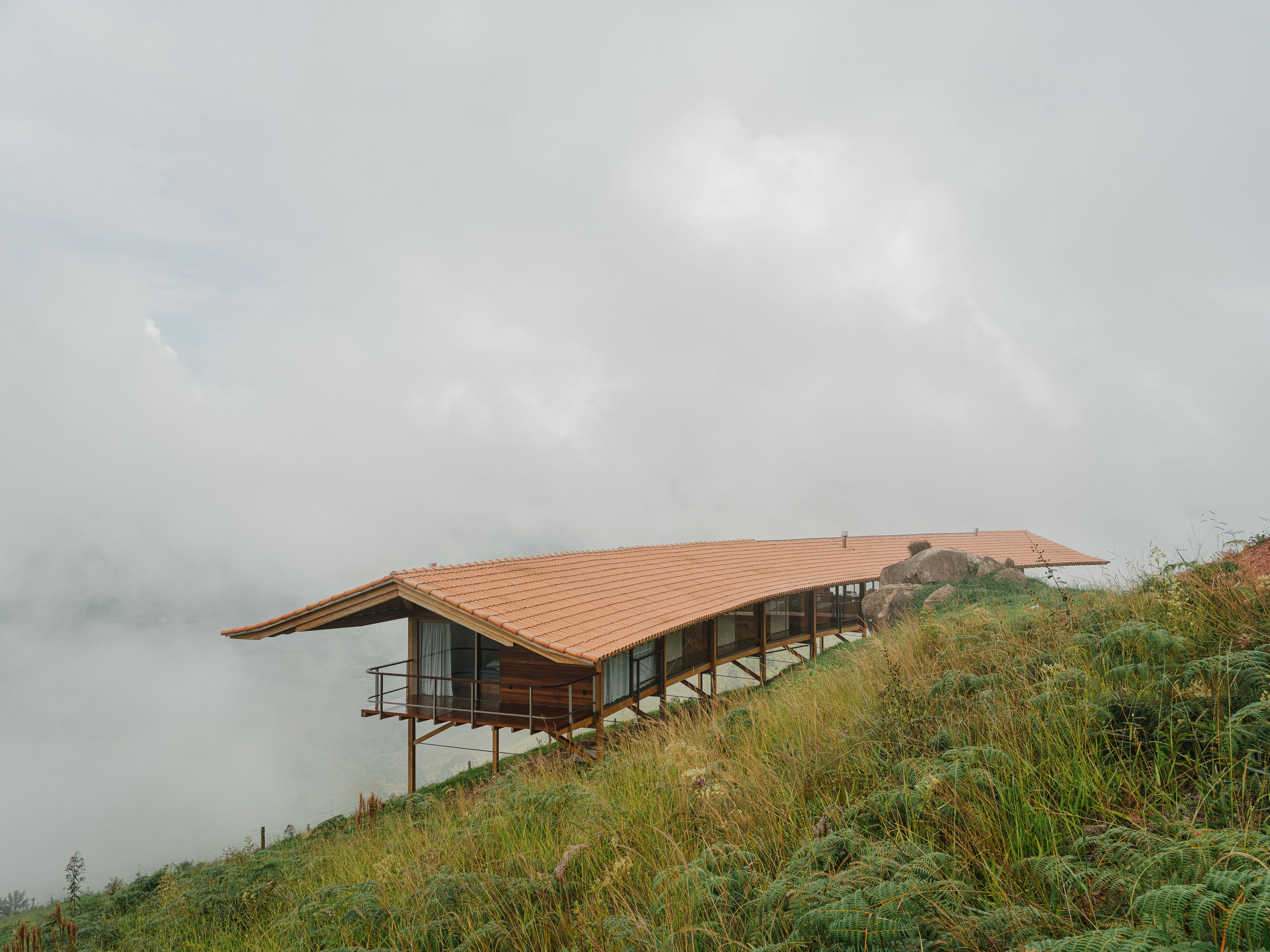
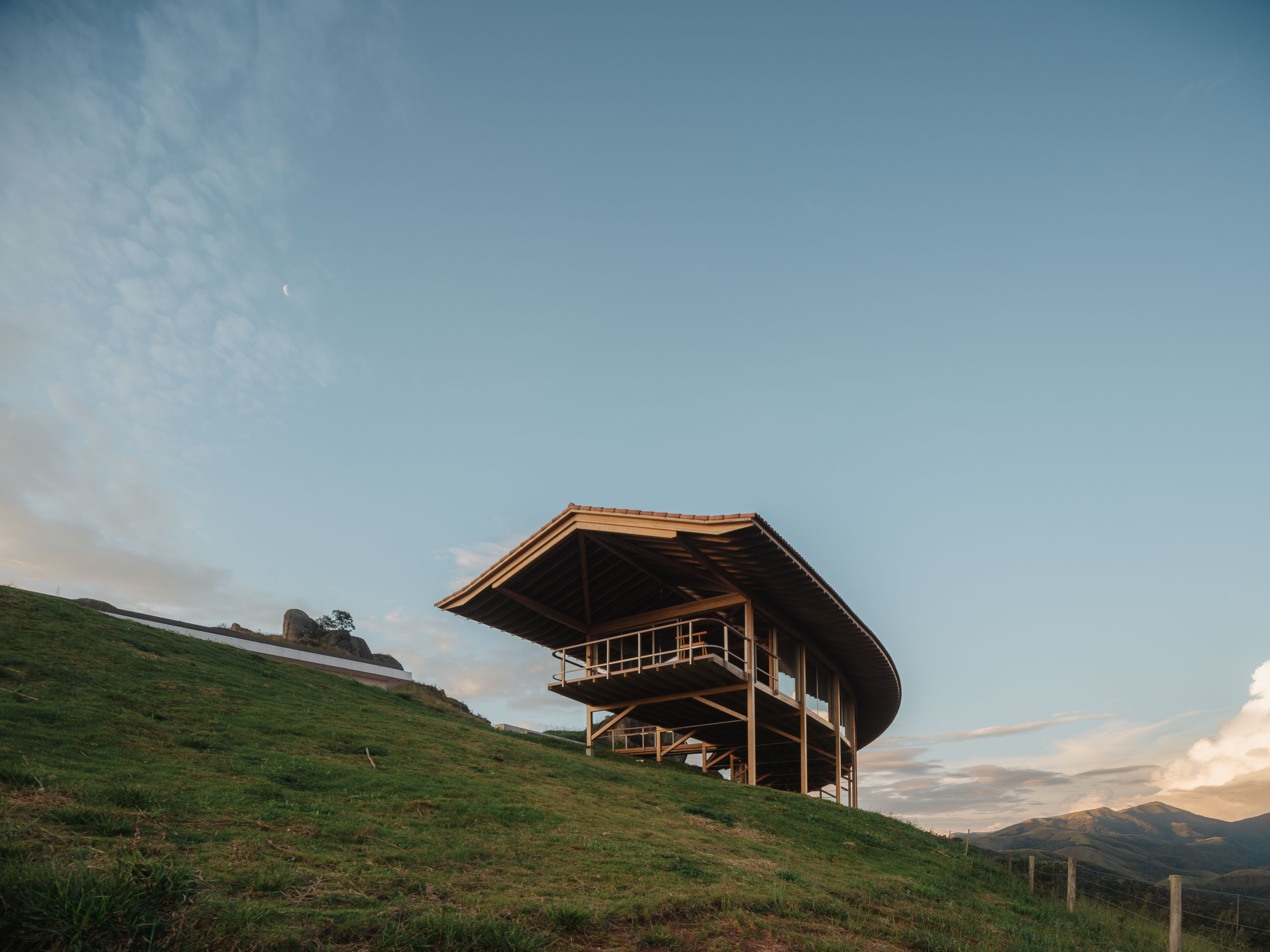
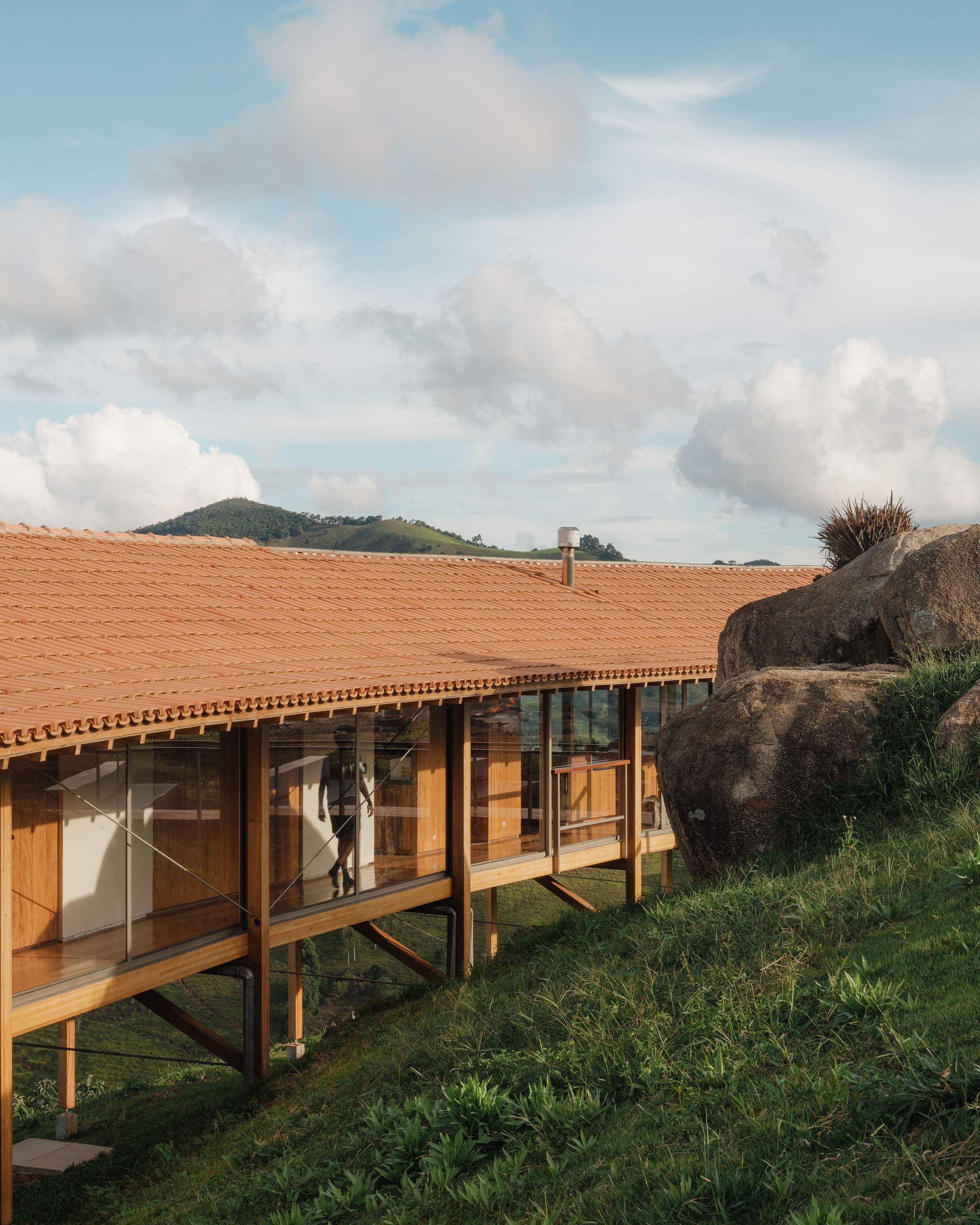
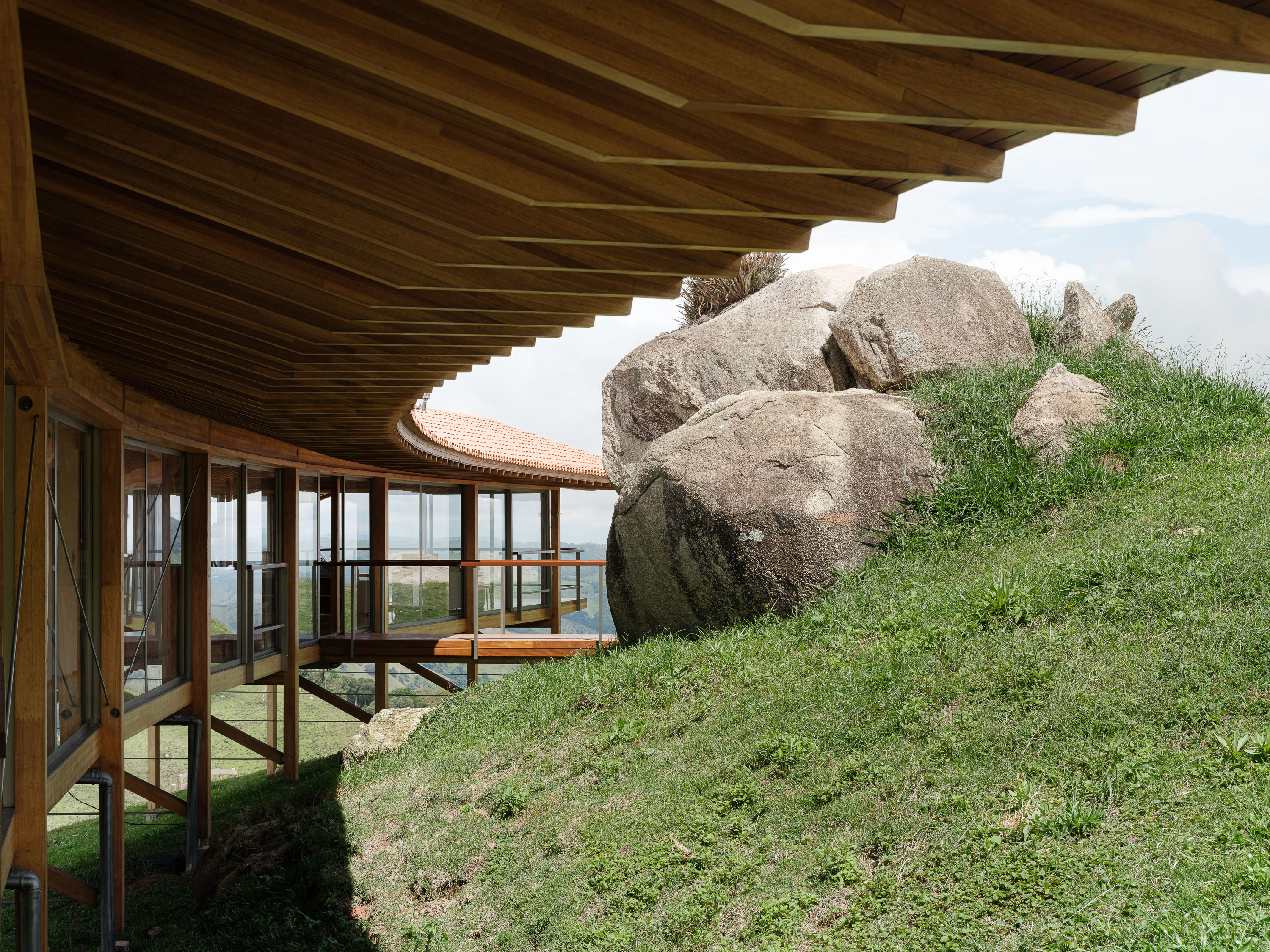
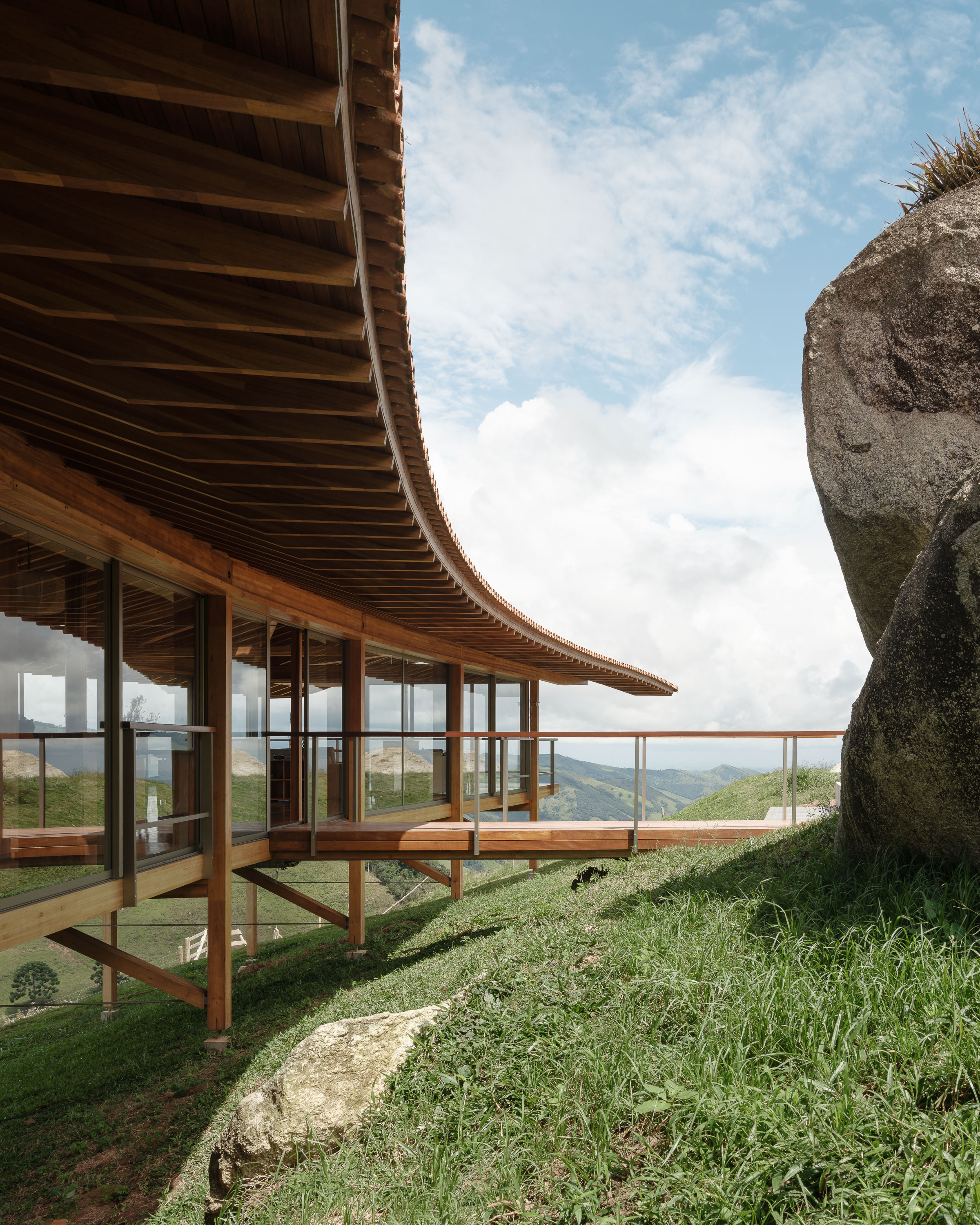
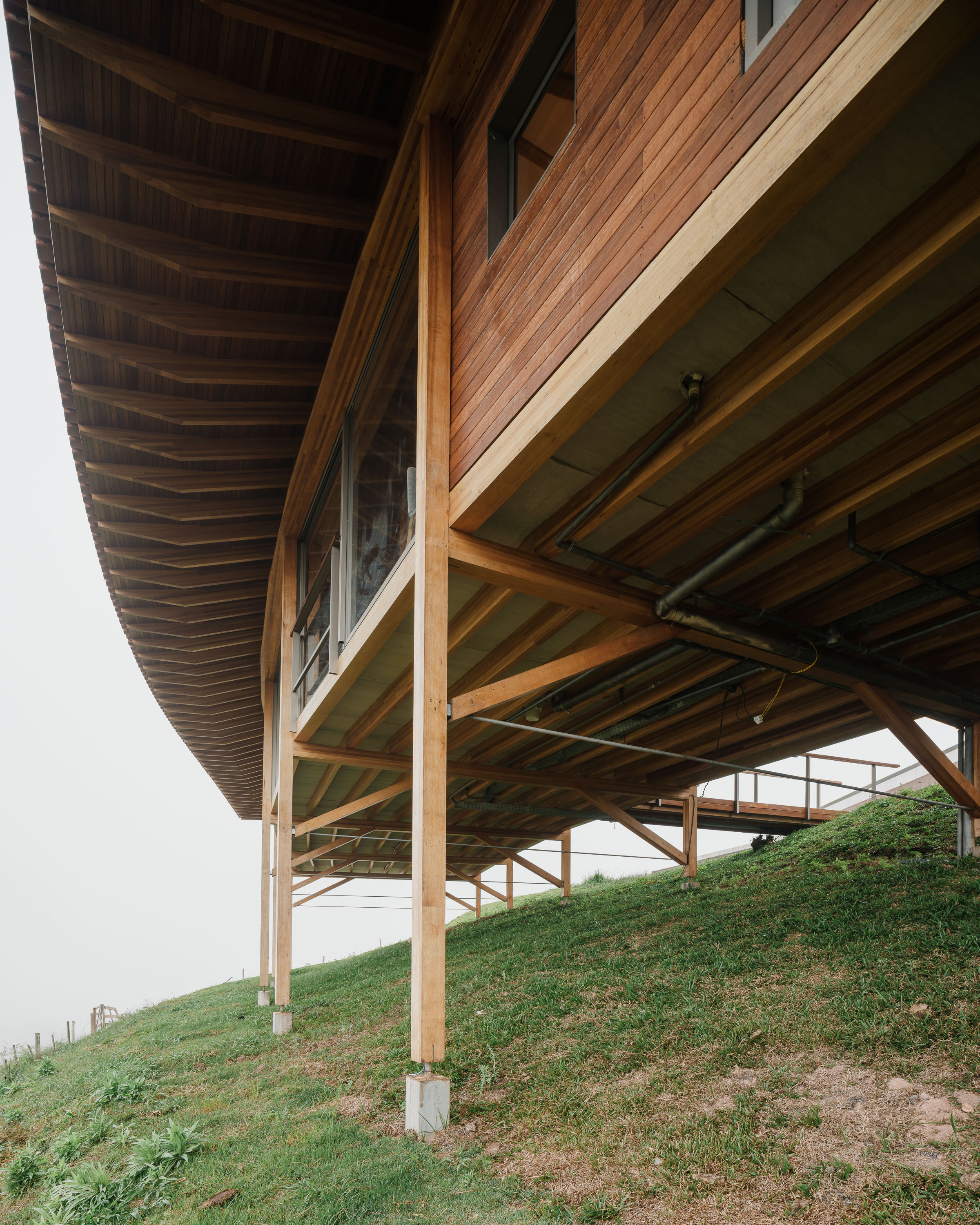
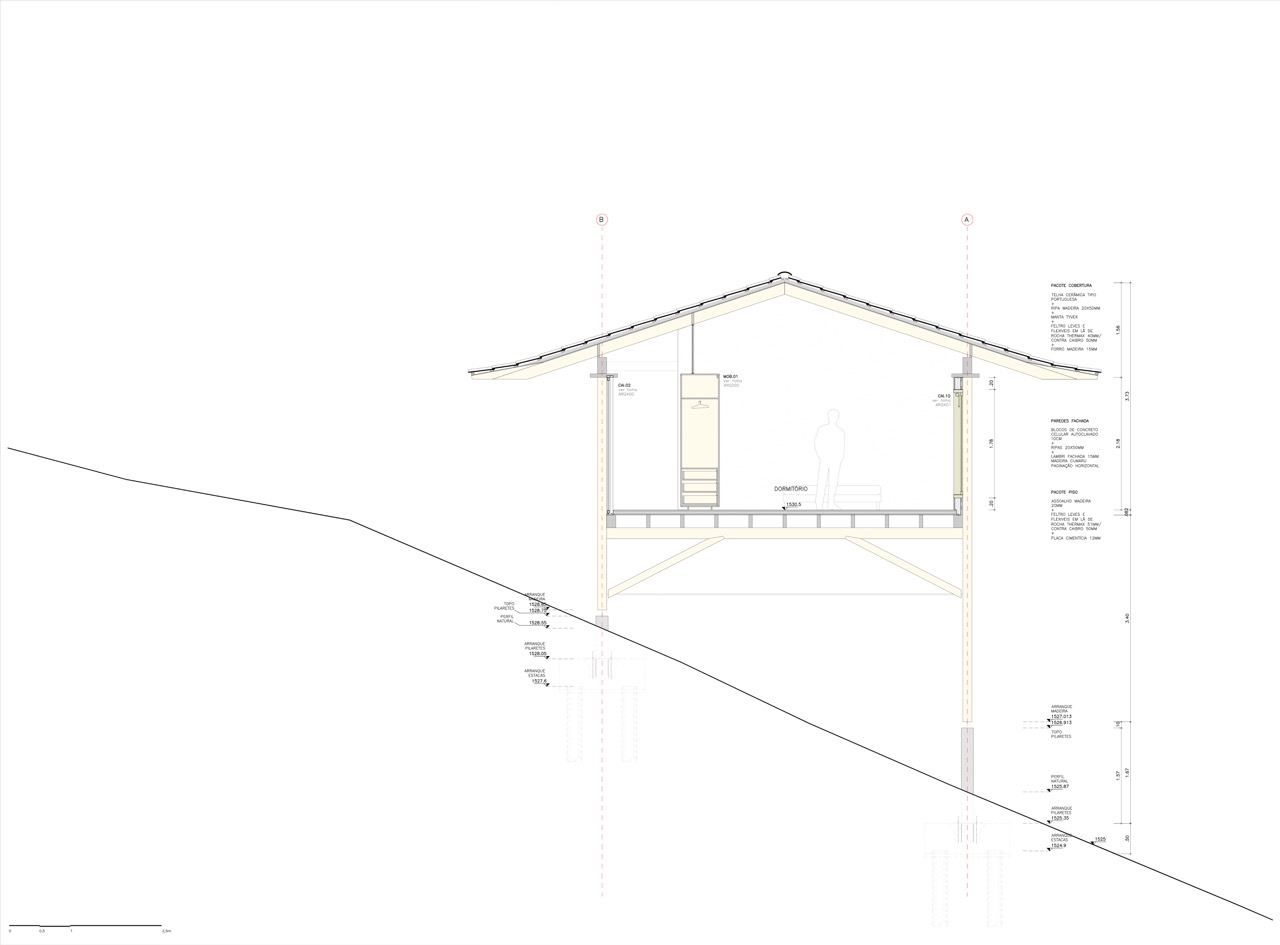
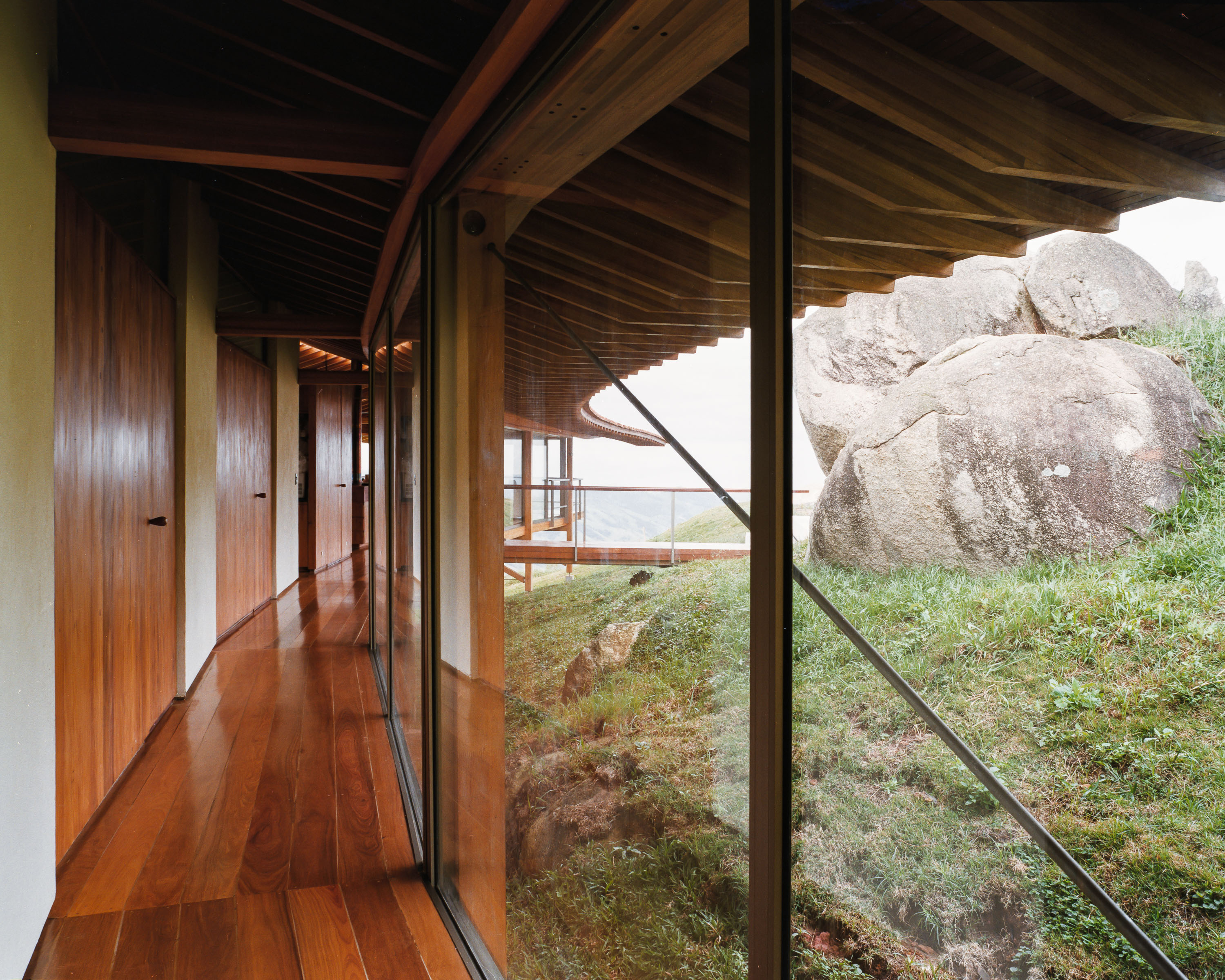
The architecture responds with a gesture of lightness, almost suspension. The house rises delicately above the ground, allowing the terrain to follow its natural flow and preserving an uninterrupted reading of the valley. Constructed from glued laminated timber, the structure connects to the land by a narrow footbridge, placed precisely beside the stone bonsai. The material presence of the tree and the rock introduces a human scale to the immensity of the surroundings. It is through this contrast that a place is formed.
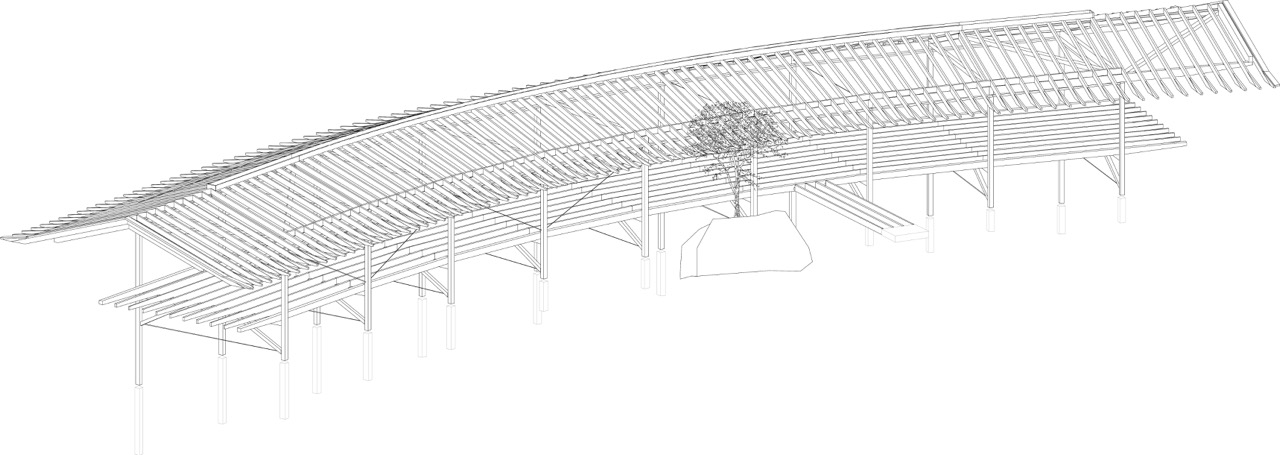
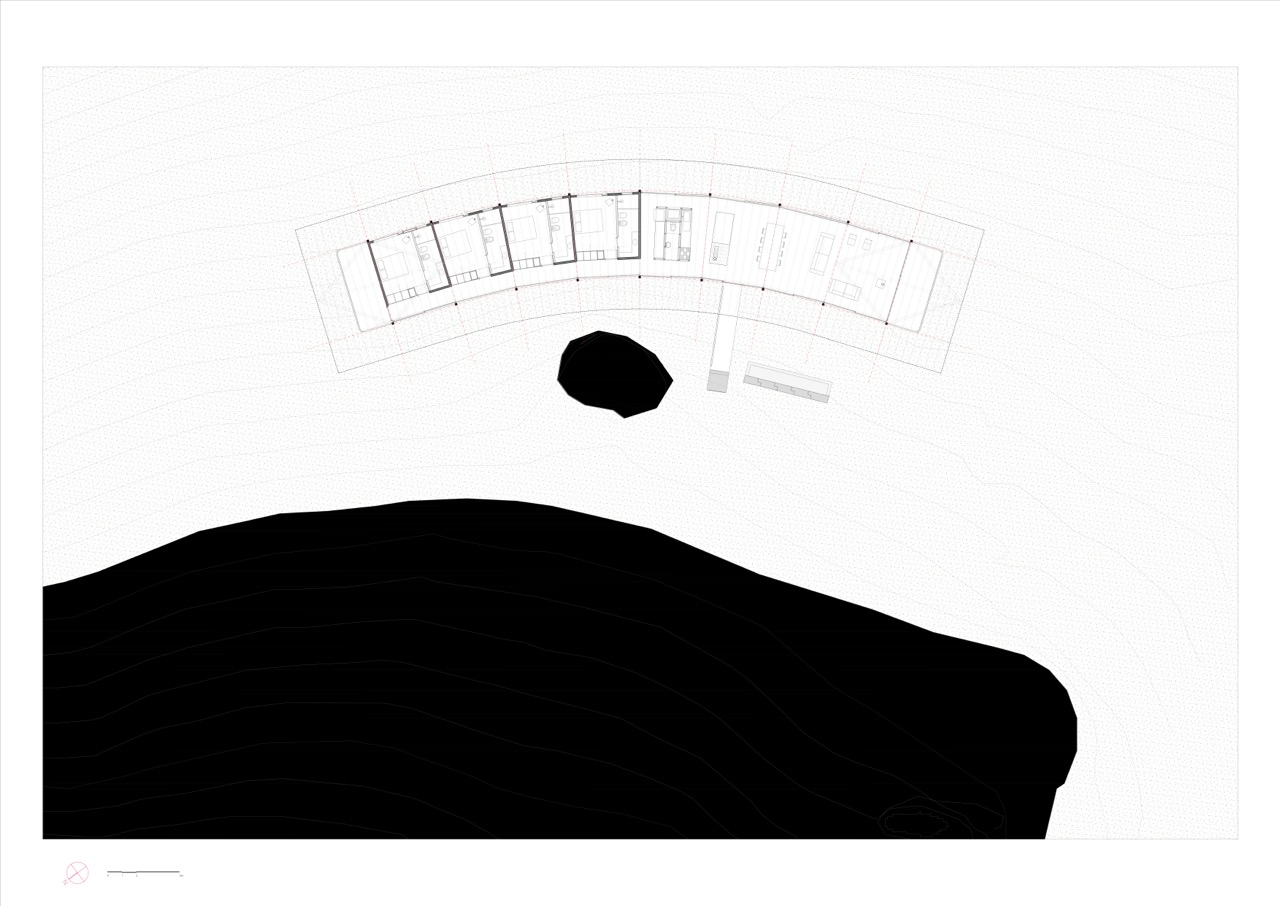
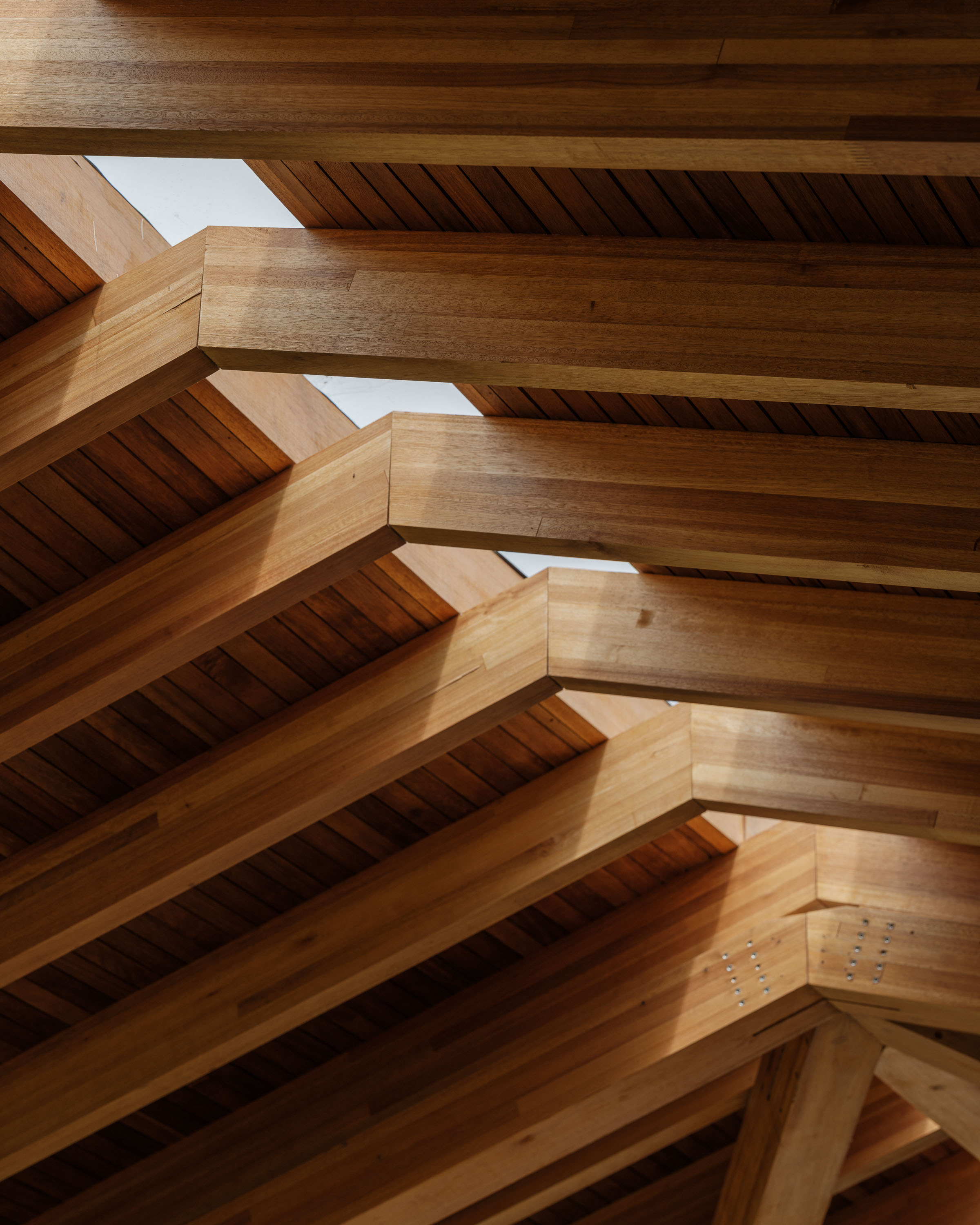
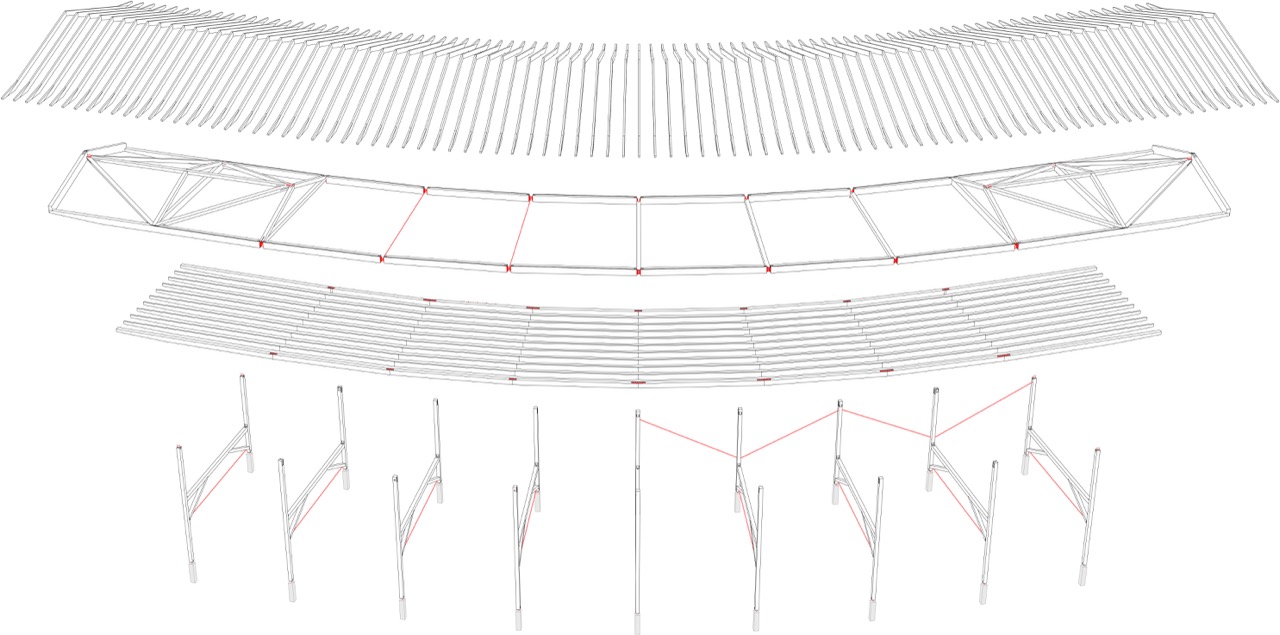
The structure’s arched geometry references this striking feature of the landscape and the natural contours of the terrain. This formal strategy is also structurally rational, as the arch provides an efficient means of resisting lateral wind loads at high altitude, while optimizing material use by reducing timber consumption and minimizing the need for steel bracing. The landscape informs the architecture, and its form is its structure.
The reduced use of timber also contributes to logistical efficiency, as less material needed to be transported to the remote and difficult-to-access site. The entire structural system was prefabricated under controlled conditions in collaboration with João Pini and the team from ITA Engenharia em Madeira, who were responsible for the structural design, fabrication in its facility, and subsequently transported for on-site assembly by a specialized team of carpenters.
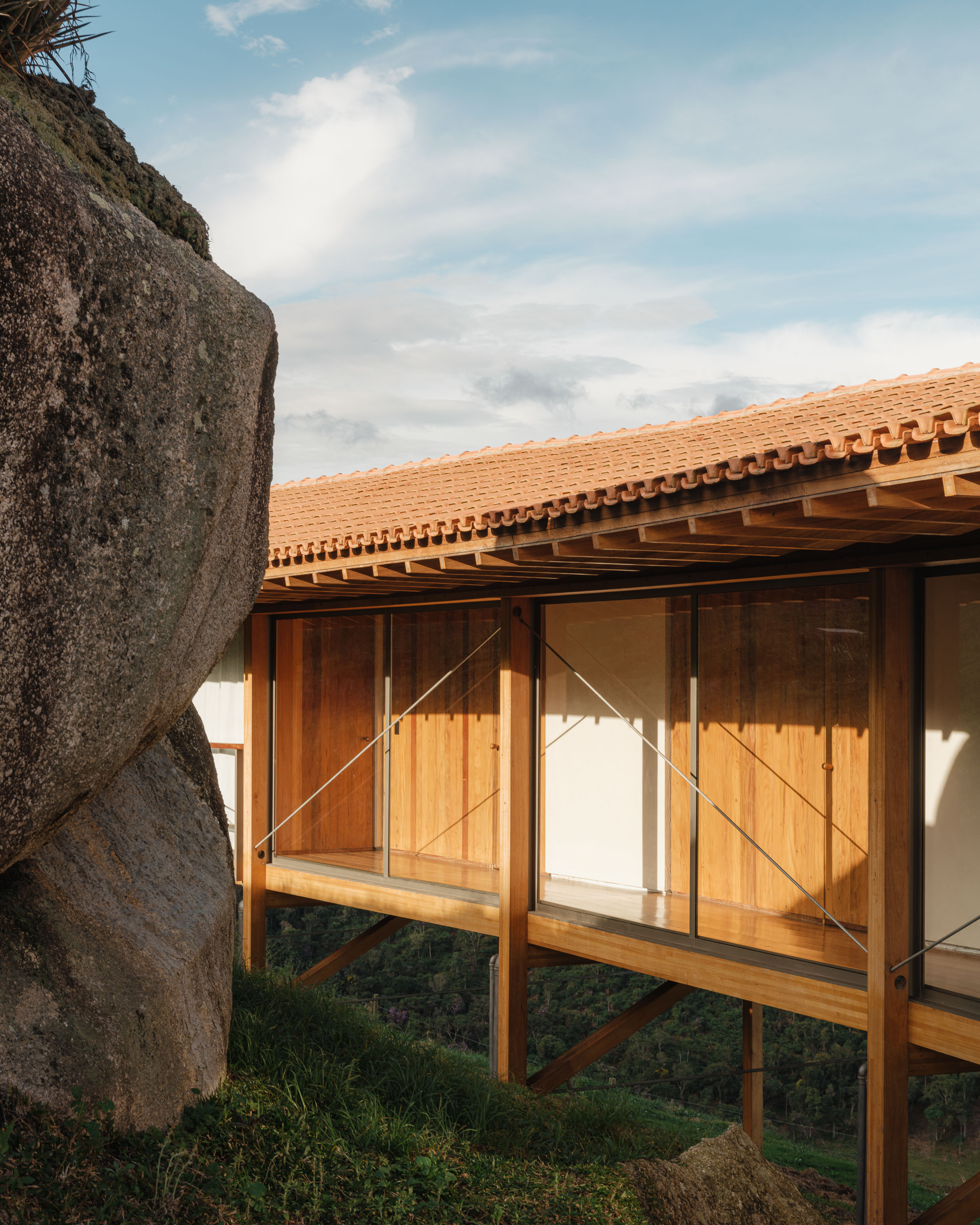
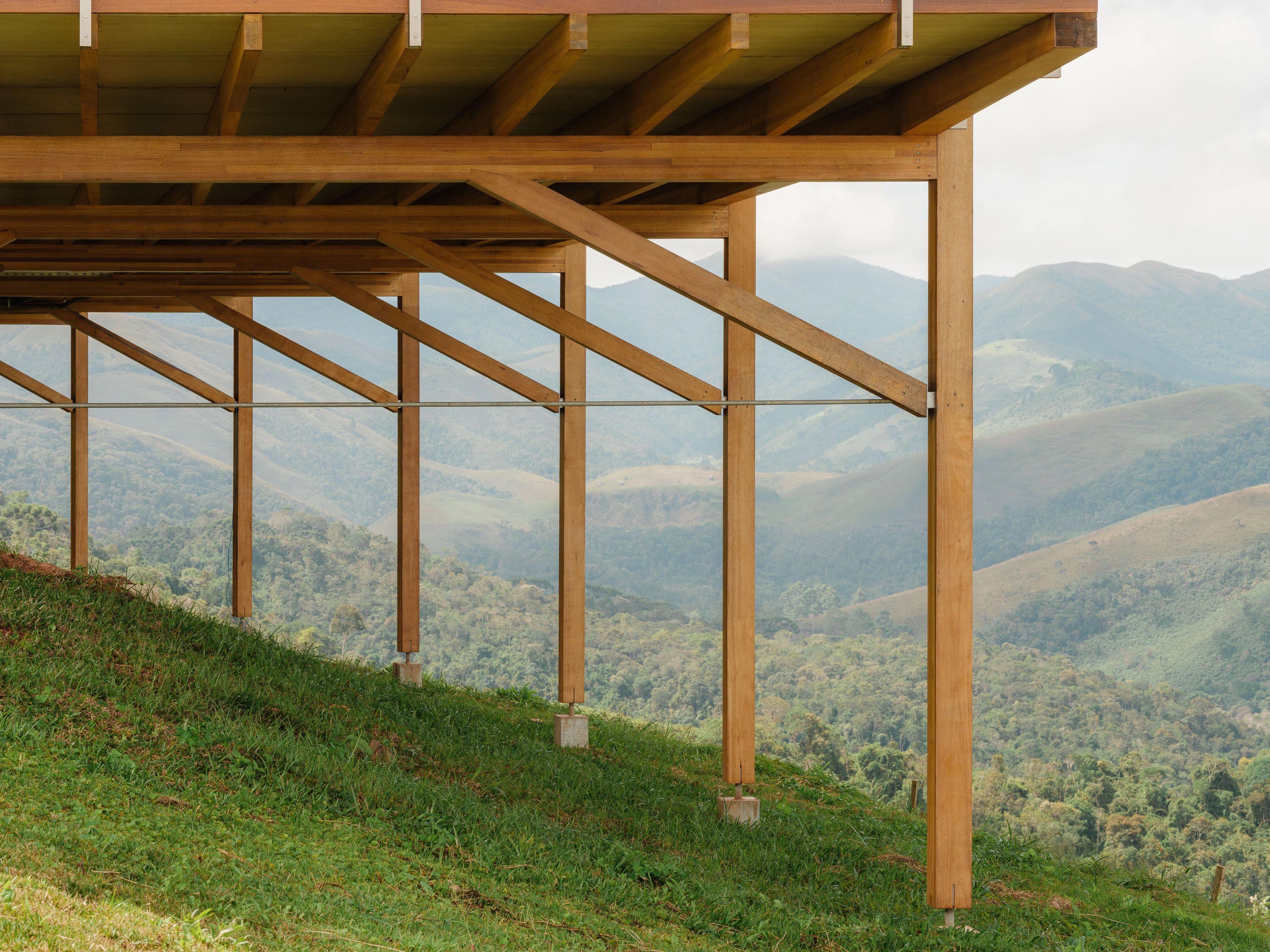
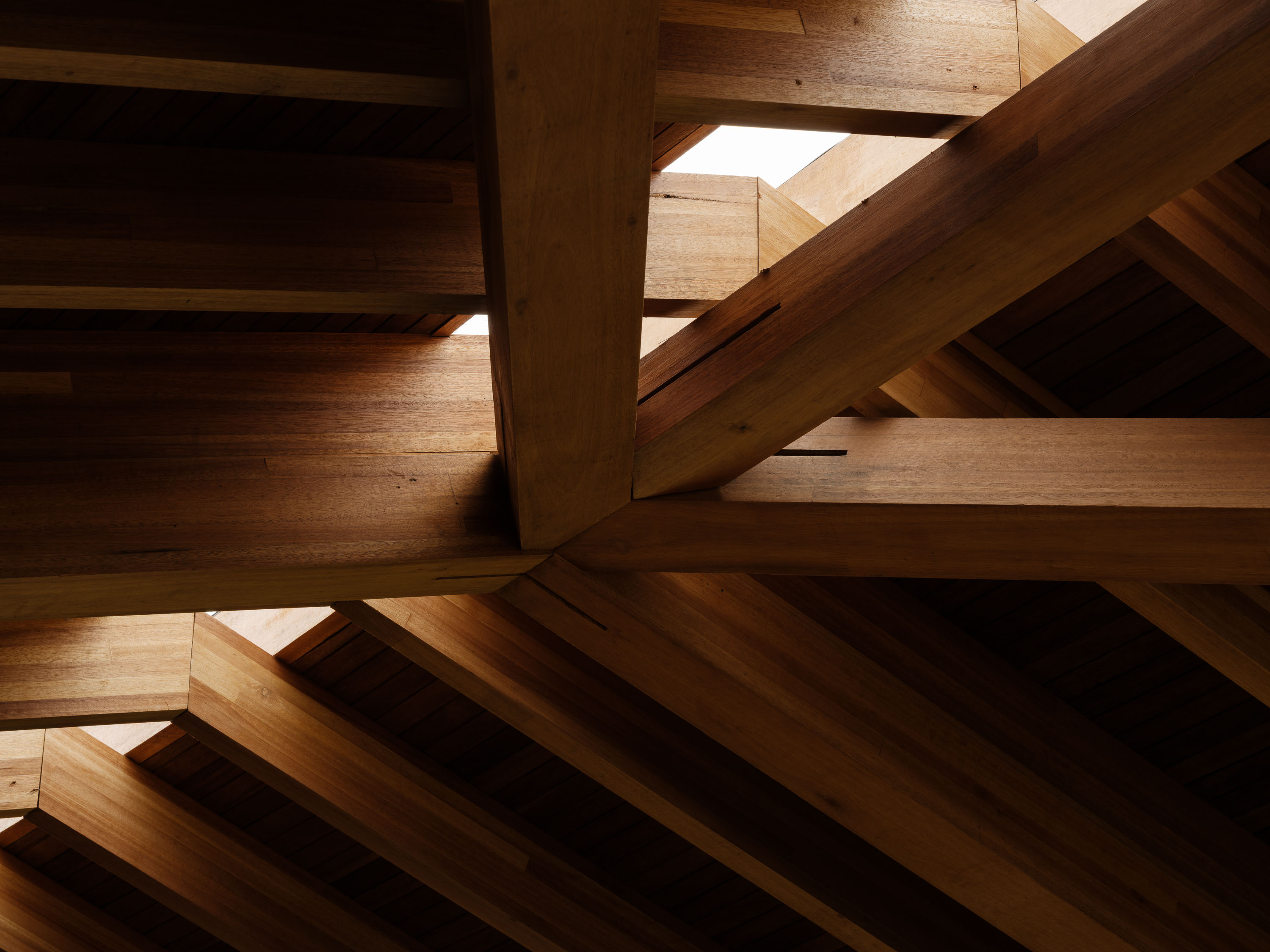
The building is composed of a sequence of nine portal frames, with slender 15×15 cm columns spanning six meters. Floor loads are supported by diagonal struts paired with a tensioned bottom cable that stabilizes horizontal forces acting on the columns. At both ends of the pavilion, two cantilevered verandas extend outward, each corresponding to a full structural bay. The gabled ceramic tile roof, which requires a steep pitch, provides the necessary depth to accommodate spatial trusses. These trusses redistribute the loads of the final modules symmetrically onto the outermost columns, enabling a free cantilever that reinforces the idea of spatial suspension before the vastness of the landscape.
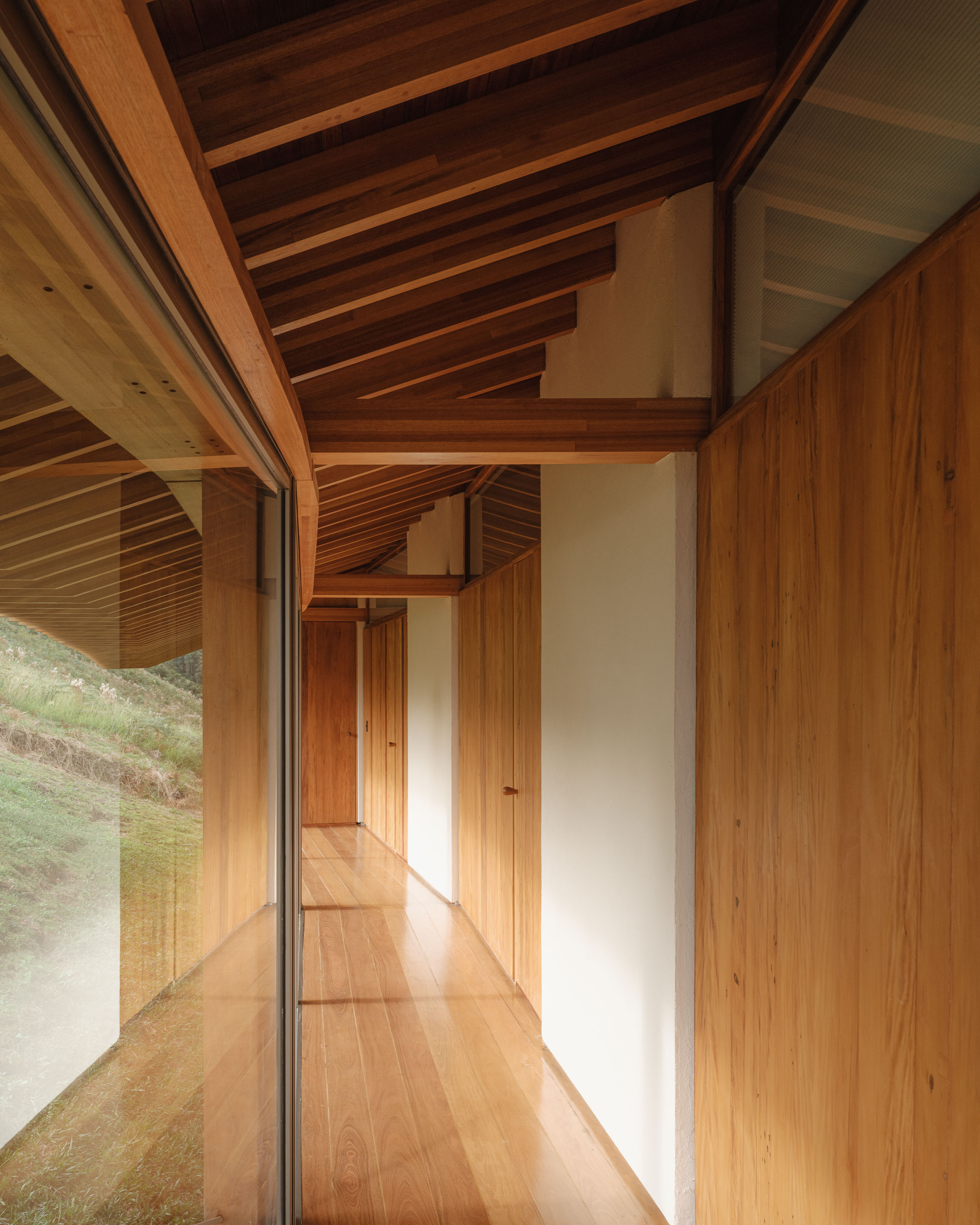
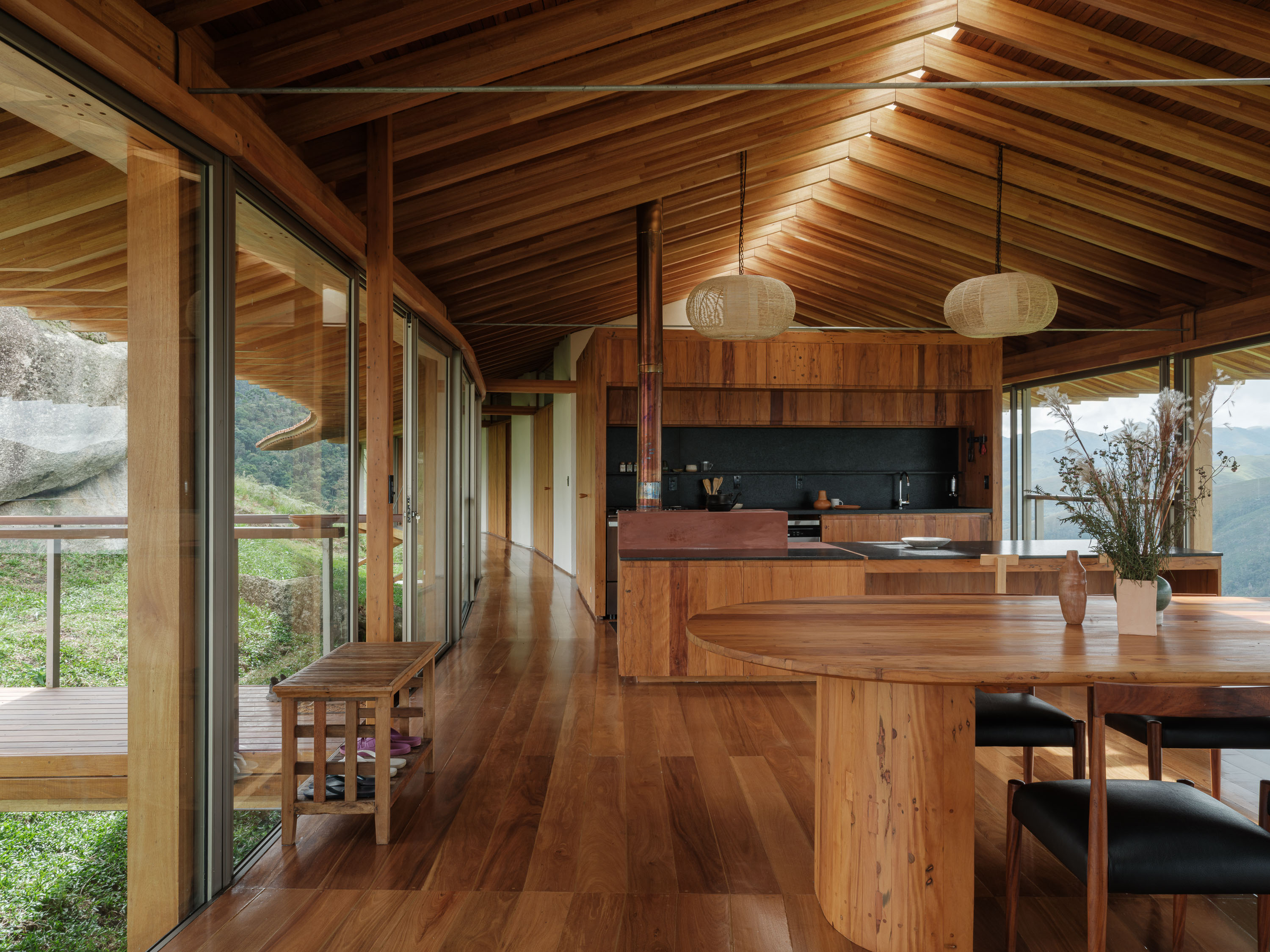
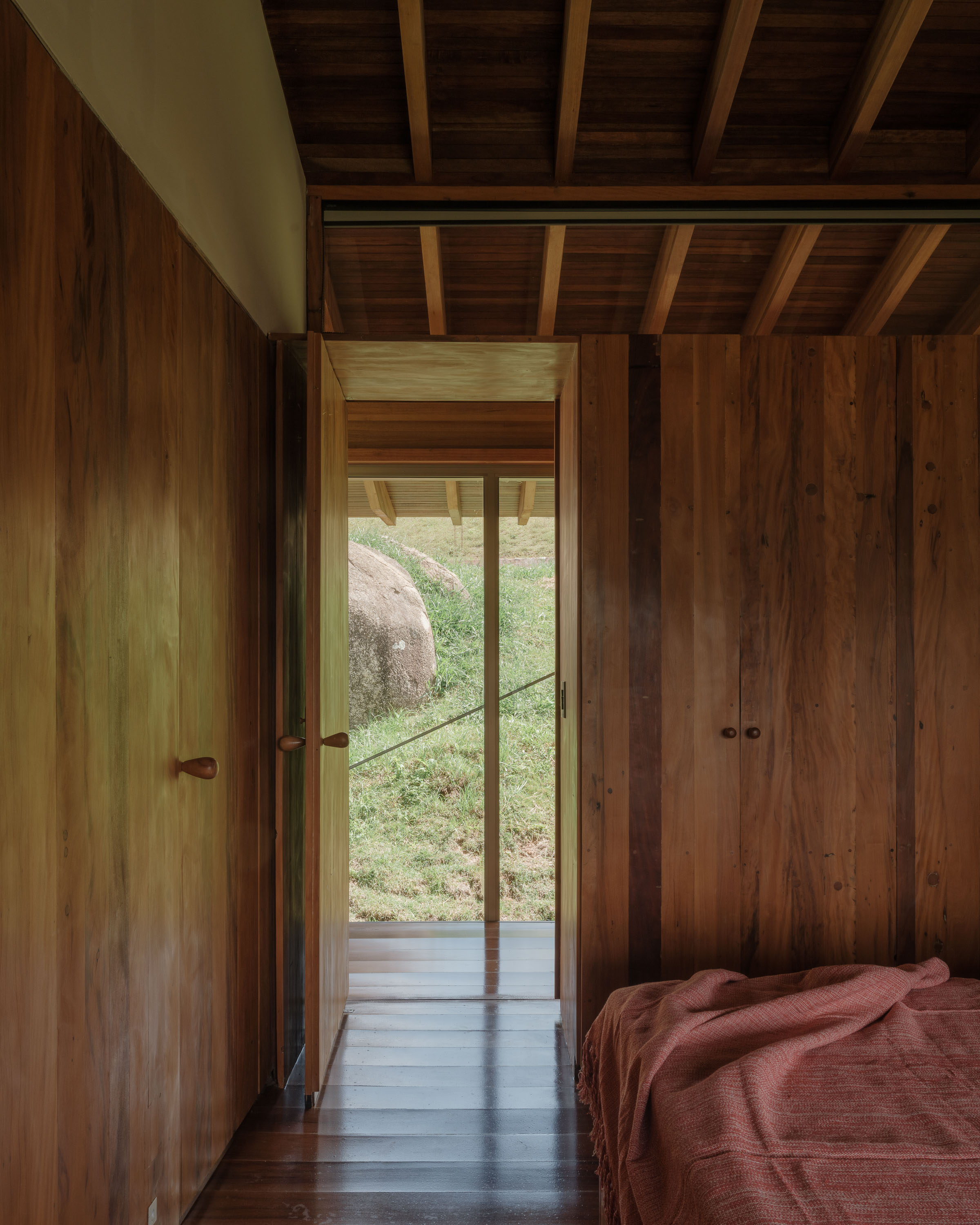
the floor plan consists of a binuclear organization according to a strict axial symmetry. From the central axis, the house unfolds to the right into the shared living spaces. In this portion, two freestanding volumes define use: one in timber houses the kitchen, pantry, and restroom; the other brings together the wood-burning stove, worktop, and dining table. The dining and living areas occupy the open space, loosely structured by the placement of furniture in a free plan. To the left of the axis are four bedrooms, arranged along a glazed corridor that frames the stone-bound bonsai, establishing a continuous relationship between interior and landscape.
The project seeks to register the essence of the site while introducing a work of advanced timber engineering into the rural landscape. Seen from a distance, it asserts itself as an object that explores the constructive and spatial potential of prefabricated timber systems. Up close, the house rests on an existing stone with minimal impact on the ground and draws on the language of local vernacular buildings—marked by ceramic tile roofs and wooden elements.